
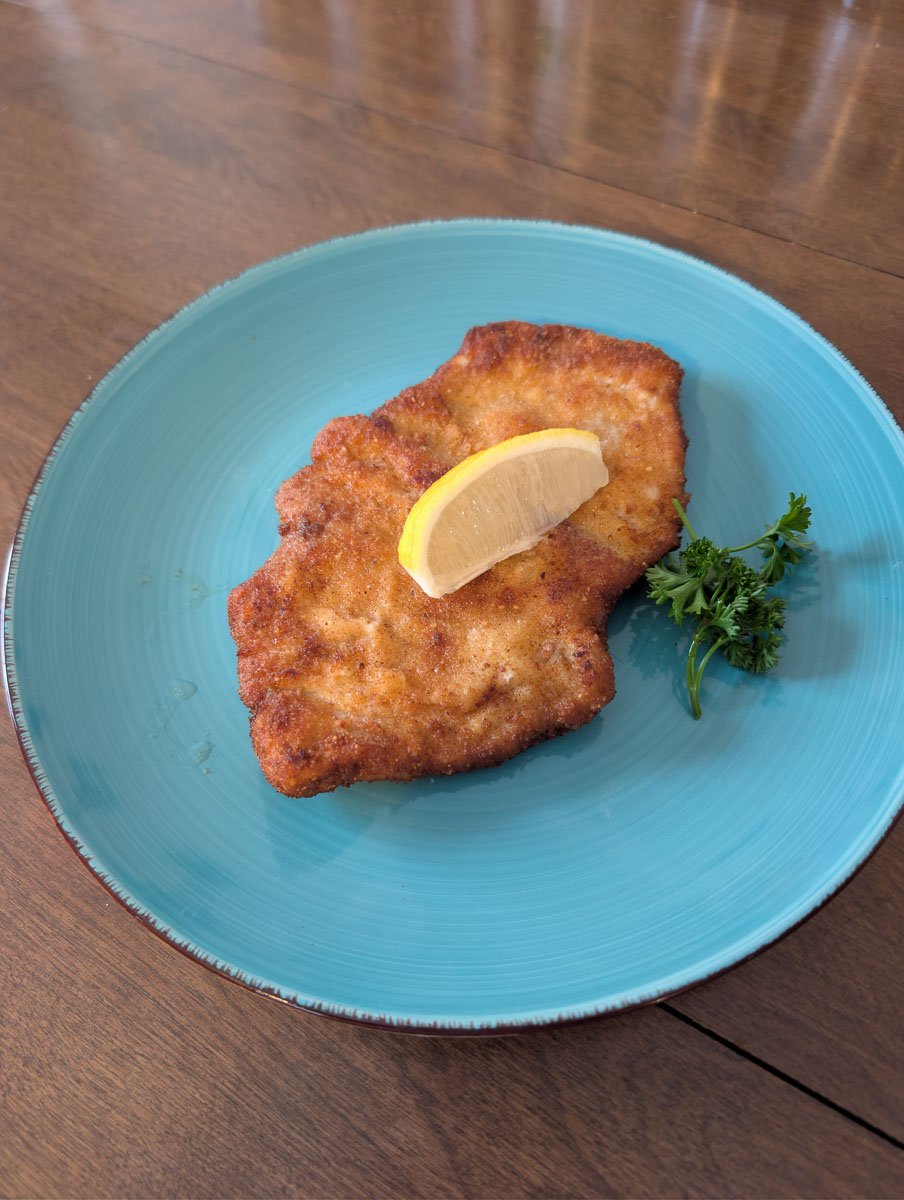
I would not be The Schnitzel Birder if I didn’t have a Schnitzel in my repertoire. For me, Schnitzel is probably the most German food I can imagine—it is one of the few items that connects every local cuisine across the country. You can get a Schnipo (Schnitzel with Pommes—fries) from Lake Constance all the way up to Kiel. In addition, nearly every Italian, Greek, or Balkan restaurant in Germany has some form of it on the menu. Because everybody knows: The Germans love their Schnitzel!
Little disclaimer: I am an amateur sharing my experience to other amateurs – in case Masterclass causes some confusion 🙂
Memories of the “Gasthof zur Sonne”
One of my earliest memories goes back to the “Gasthof zur Sonne” in my hometown, Weilheim an der Teck. It was a restaurant with good Swabian food, massive portions, and a host named Otto who, to my child-self, seemed very grumpy. Looking back, I realize he wasn’t grumpy; he was just an authentic Swabian.
My go-to was the Schnitzel with fries and dark gravy. Even as a little kid, I always ordered the adult portion, and most of the time, I finished the whole plate. Today, that same building houses a Döner Kebab place, but even they have it on the menu: Schnitzel with fries!
What is a Schnitzel?
Some argue the Schnitzel is strictly Austrian (the famous Wiener Schnitzel or Vienna Schnitzel). While I agree with the history, over the centuries, it simply became THE German dish.
Essentially, a Schnitzel is a thin slice of meat—poultry, pork, or veal (rarely beef)—breaded and pan-fried. The original Vienna version uses veal, but in German home kitchens, pork loin is the standard of the weeknight dinner.
Preparing the Meat: The Butterfly and the Hammer
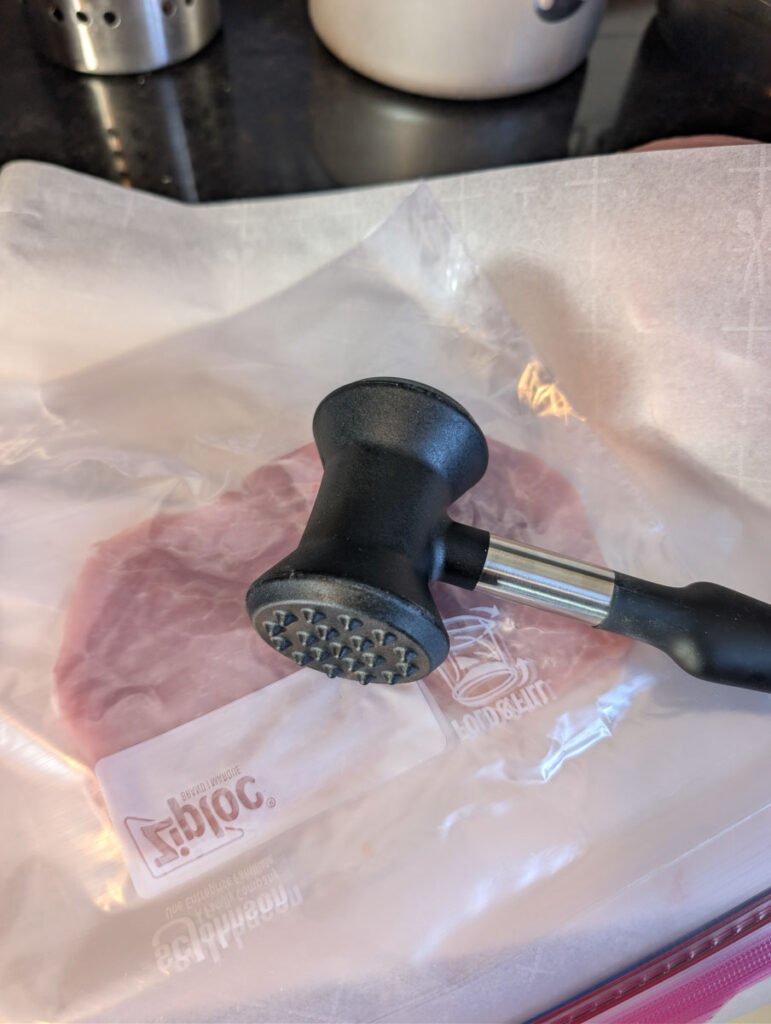
I like to use pork loin. If you buy them pre-sliced, they are usually 1/2 to 3/4 of an inch thick—way too thick for a Schnitzel! You have two techniques to reach that perfect thickness:
- Butterfly Cut: Slice the meat almost all the way through parallel to the board, then open it up like a book. This creates a larger, thinner, and more uniform piece.
- Tenderizer: Beating the meat with a tenderizer hammer! If you don’t have a specific hammer, any heavy, sturdy kitchen object will do.
In my humble opinion, tenderizing isn’t optional—it breaks down the fibers to ensure the meat is fork-tender. And it is fun to do!
The Panierstraße (The Breading Line)
Once the meat is flattened, it’s time for the Panierstraße. This is a series of three containers:
- Flour & Seasoning: I season the meat directly first, but I also add seasoning to the flour.
- Egg Wash: Whisked eggs to act as the “glue.”
- Bread Crumbs: Be generous! This is where that crispy crust comes from.
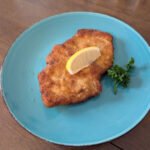
Das Schnitzel – THE German dish.
Ingredients
- 4 Pork loin cutlets approx. 5-6 oz each
- 1/2 cup All-purpose flour
- 2-3 Large eggs beaten
- 1.5 cups Bread crumbs preferably homemade from stale rolls!
- Salt and Pepper to taste
- 1 tsp Paprika optional, for the flour mix
- 1 cup Clarified butter or vegetable oil for frying
- 1 Lemon cut into wedges for serving
Instructions
- Flatten: Use the butterfly cut if the meat is thick, then pound the cutlets between two sheets of plastic wrap until they are about 1/4 inch thick.
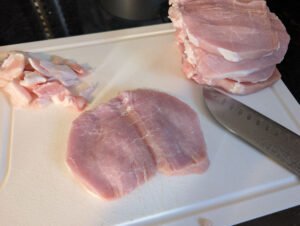
- Season: Generously salt and pepper both sides of the meat.
- Set up the Panierstraße: Place flour (mixed with paprika) in the first dish, beaten eggs in the second, and bread crumbs in the third.
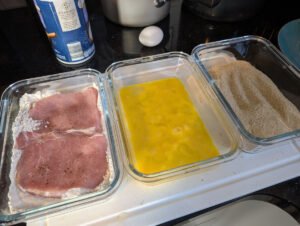
- Bread: Dredge the meat in flour (shake off excess), dip in egg, and finally coat in bread crumbs. Do not press the crumbs into the meat—you want them to sit loosely so they can "soufflé" or puff up.
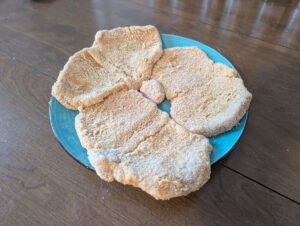
- Fry: Heat oil in a large skillet over medium-high heat. You need enough oil so the Schnitzel can "swim."
- The Swirl: Once the oil is hot (around 340°F), carefully lay the Schnitzel in. Shake the pan gently in a circular motion so the hot oil washes over the top of the breading.
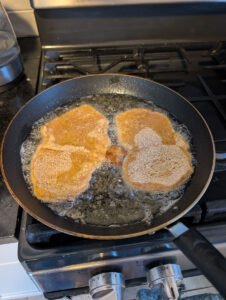
- Finish: Fry for 3-4 minutes per side until golden brown. Drain briefly on paper towels.
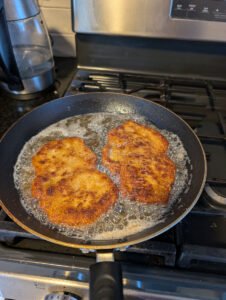
Now what?
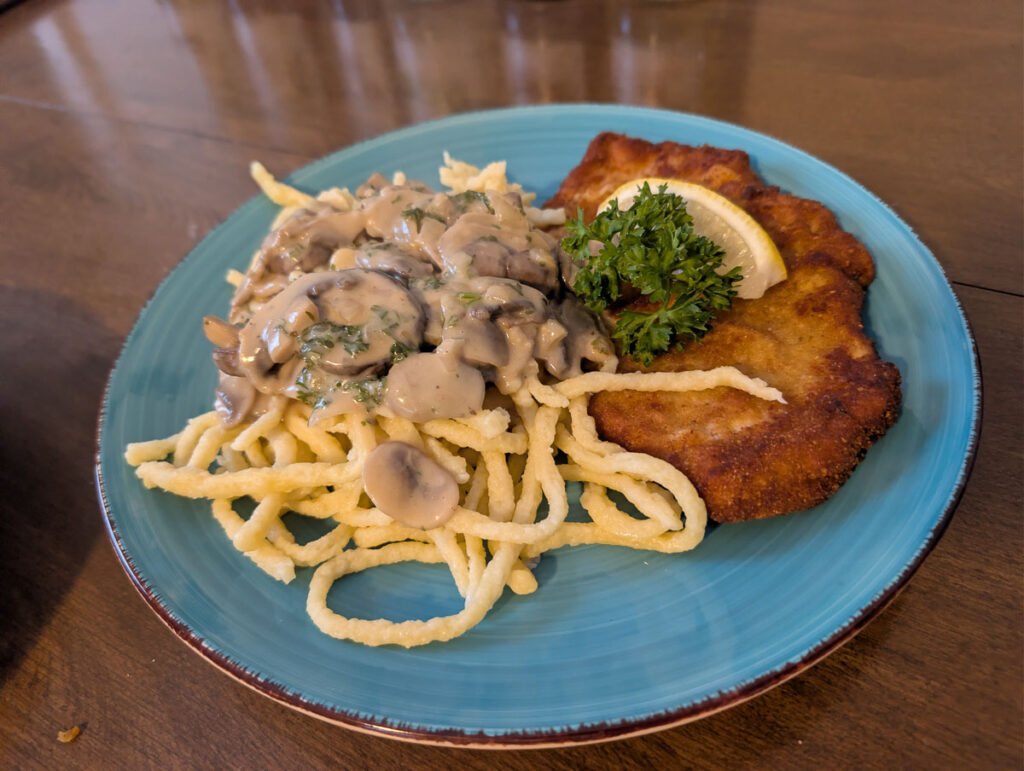
Serve with a lemon wedge and a side of your choice. While fries are the classic childhood choice, nothing beats the “Schnitzel Trifecta”: Schnitzel, Spätzle, and Jägersauce (Creamy Mushroom Sauce).
Other side option would be my Mayo-free Potato Salad!
Craving German food but not making it yourself? Try these German restaurants in the Detroit metro!
Did you enjoy my Schnitzel recipe? Let me know, and leave a comment below! 🥨🦉
Leave a Reply