

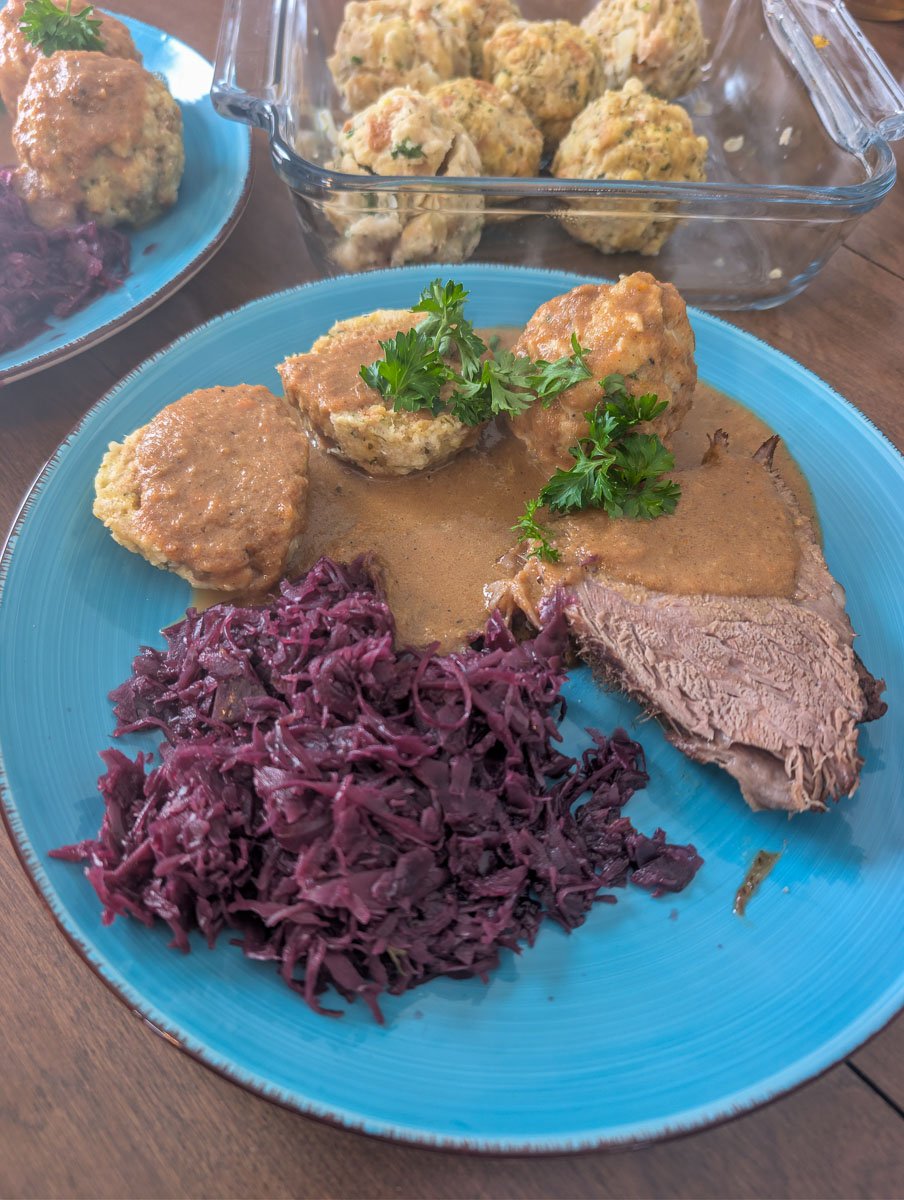
It surprises a lot of people that German cuisine has a lot of weird-sounding sour meals other than the obvious Sauerkraut. Everybody knows of Schnitzel and Potato Salad, but what about Saure Nieren (Sour Kidneys), Saure Kutteln (Sour Tripe), or the more common Sauerbraten (Sour Roast)? The latter is the star of today’s post.
The Great Sauerbraten Divide
First, if a German talks about Sauerbraten, they could mean two different things: the “Rheinische Sauerbraten” (Rhineland style) and the “Schwäbische Sauerbraten” (Swabian style)—and all the other local variations. Since I am very much focused on my home area, Swabia, this is the Sauerbraten we will talk about here. It is more actually sour than the Rhine version, which is commonly served with a sweeter gravy.
An Adult’s Appreciation for the Sour
I wish I could say that Sauerbraten was a childhood favorite. When my mother was making it, my brother and I were not really amazed. Sour meals were tough to sell to us. Just like I developed a taste for bitterness as an adult, I also developed a taste for sour things, which goes beyond sweet-and-sour Haribo gummies.

The Challenge of the American Kitchen
The Swabian Sauerbraten gets its taste through brining the beef roast for at least three days in red wine vinegar, red wine, and a mixture of vegetables and spices. The challenge in the US is finding all those spices. In this recipe, I will use some replacement products. The following items from the original recipe got replaced:
- Juniper Berries: Instead of juniper berries, you can use a mix of caraway seeds and rosemary. If even caraway seeds are hard to obtain, try coriander seeds!
- Mirepoix: Obviously, you can get all the mirepoix vegetables in the US, but unlike in Germany, you cannot buy a nice pack of carrots, celery root, leeks, and parsley. You have to buy those separately. My replacement here is that I replaced the leeks with nothing and used the celery stalks instead of the roots.
- Mustard Seeds: You can replace the tablespoon of seeds with a teaspoon full of ground mustard.
My recipe considers the first two ingredient replacements already. You can of course use celery root, juniper berries, and leeks, if those are available to you! 🥨🦉
What can I do while the Sauerbraten is doing its thing?
I am not just a recipe blog. I also like to write about my other hobbies which are birding and exploring the world. In the meantime you could read about my last trip to PTE Mouilee or how I was not successful on my hunt for snowy owls.
Spring is in the air! Red-winged Blackbirds are back at Metrobeach. See the latest on nesting Great Horned Owls, Wood Ducks, and my favorite birding trails. 🥨🦉


Swabian Sauerbraten
Ingredients
For the Marinade (Beize)
- 1 tbsp Mustard Seeds
- 2 Bay Leaves
- 1 tsp Black Peppercorns
- 1/2 tsp Rosemary & 1/2 tsp Caraway Seeds Swap for Juniper berries
- 1 3/4 cups Water approx. 400 ml
- 7 oz Carrots, chopped 200g
- 7 oz Celery, chopped 200g
- 1 bunch Fresh Parsley
- 1 Medium Onion
- 3-4 Cloves of Garlic
- 13.5 fl oz Red Wine Vinegar approx. 400 ml
- 13.5 fl oz Dry Red Wine approx. 400 ml
For the Roast (Braten)
- 4.4 lbs Beef Chuck or Shoulder Roast approx. 2 kg Rinderbraten
- Salt
- 2 tbsp Sunflower Oil or Neutral Oil
- 2 tbsp Tomato Paste
- 1 tsp Sugar
- 3/4 cup Dry Red Wine
- 1 3/4 cups Beef Broth
- 1 3/4 cups Water
- 3.5 fl oz Heavy Cream
Instructions
- Toast the Spices: In a large pot over medium heat, toast the mustard seeds, bay leaves, black peppercorns, rosemary, and caraway seeds for 1–2 minutes. Stir constantly until the aromas are released.
- Create the "Spice Bomb": Let the toasted spices cool for a moment. Place them in the center of a paper coffee filter. Gather the edges and tie it tightly with kitchen string (or unflavored dental floss) to keep the seeds from escaping into the brine.
- Prep the Vegetables: Peel the carrots and celery, then cut them into 1-inch (2 cm) cubes. Dice the onion and wash the parsley. Peel your 3–4 garlic cloves and crush them slightly with the flat side of your knife to release the essential oils.
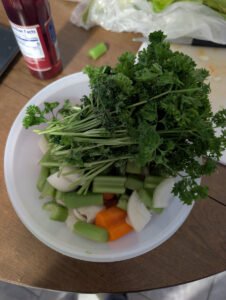
- Boil the Brine: Add the water and your "spice bomb" to the large pot. Bring to a boil. Once boiling, add the cubed vegetables, onions, garlic, red wine vinegar, and red wine.
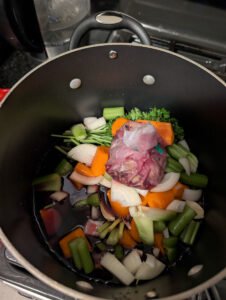
- The "Hannes" Cooling Rule: Remove the pot from the heat and let the brine cool down completely. This is a non-negotiable step; never add hot brine to raw meat, as it will "cook" the outside and seal the pores, preventing the marinade from penetrating properly.
- The Long Soak (3–7 Days): Place the beef chuck roast in a glass or ceramic container. Pour the cooled brine—including the vegetables and spice bag—over the meat.Pro-Tip: If the meat isn't fully covered, add a mixture of water and red wine vinegar (using a 3:1 ratio).
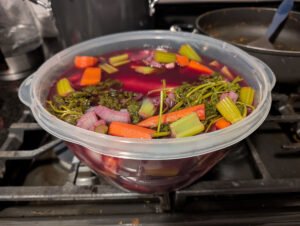
- Storage: Cover and refrigerate for at least 3 days. Up to 7 days is even better for maximum tenderness.
- Prep for Searing: When you are ready to cook, remove the meat from the fridge. Take the roast out of the liquid and pat it dry thoroughly with paper towels (this ensures a good crust). Discard the spice bag and strain the vegetables through a sieve, but be sure to save the liquid!
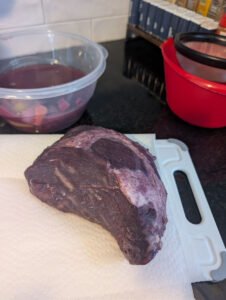
- Brown the Meat: Preheat your oven to 325°F (170°C). Season the meat with salt. In a Dutch oven or heavy roasting pan, heat the sunflower oil over medium-high heat. Brown the meat on all sides for 2–3 minutes until it has a dark, crispy crust, then set it aside.
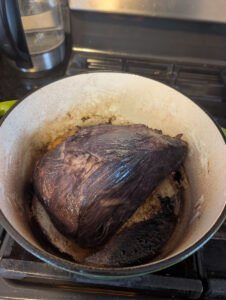
- Sauté the Aromatics: In the same pan, sauté the strained vegetables in the remaining fat for 2–3 minutes. Add the tomato paste and sugar. Stir for 1 minute until the paste smells toasted and slightly sweet.
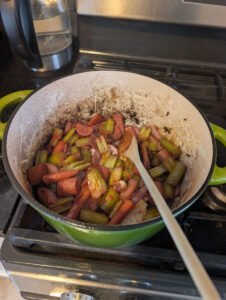
- Deglaze and Build the Sauce: Pour in the dry red wine. Use a wooden spoon to scrape up all the brown bits (the Fond) from the bottom of the pan. Let the wine reduce by half, then add the beef broth and 2.5 cups (600 ml) of your saved marinade liquid.
- The Braise: Place the meat back into the pan and bring the liquid to a boil on the stove. Once boiling, cover the pan and move it to the lowest rack of the oven. Braise for 2.5–3 hours, turning the meat every 45 minutes to keep it moist.
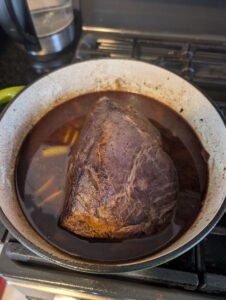
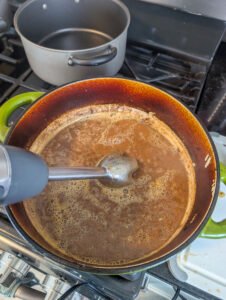
- Reduce the Sauce: Once the meat is fork-tender, remove it from the pan and set it aside to rest. Strain the sauce or scoop out the vegetables. Simmer the liquid on the stove for 5–10 minutes to reduce it to a concentrated, rich gravy.
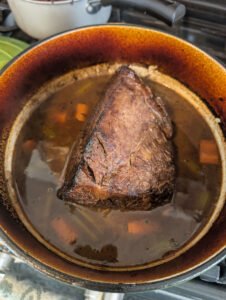
- The Creamy Finish: Stir in the heavy cream. If you prefer a thicker sauce, you can puree some of the cooked vegetables and stir them back in. Season with salt to taste.
More Swabian Essentials
Swabian Potato Salad ○ Kohlrabi with Fleischkuechle (Swabian Meatballs) ○ Sauerbraten (Sour Roast)

Serve with your choice of sides. I recommend red cabbage, bread dumplings or spaetzle.
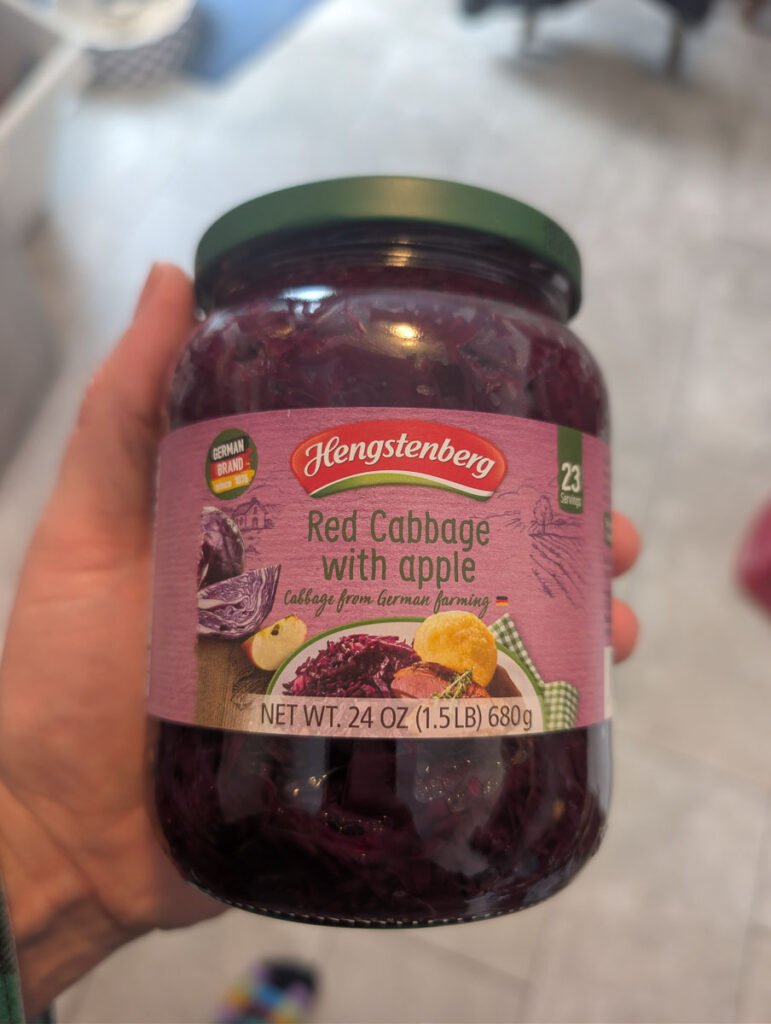
Did you try my recipe? Let me know how it went in the comments below!
If you are looking to eat a Sauerbraten in a local Detroit restaurant, check out the Dakota Inn! I have written a little article about them and some other German restaurants in the Detroit metro. 🥨🦉
Leave a Reply