

From Peeps to creepy Easter Bunny costumes, Easter in the US is slightly different from what I witnessed in my little Swabian village. I will show you some of the things which surprised me a little bit. I don’t claim that my observations are universally valid for the US or Germany.
German Easter Holidays vs. US Working Days
In Germany, Easter Weekend is long. It starts with Good Friday and continues all the way to Easter Monday. In the US, Monday is no federal holiday and most businesses will be open as usual. As a young adult, I used this long weekend often to travel Germany and Europe. For families, this gives more time to visit the grandparents, have long Easter brunches, or just to sleep in. While in the US even on federal holidays most stores are still at least partially open, in Germany they will be closed Friday, Sunday, and Monday. That means in the week leading up to Easter and on that Saturday in between, grocery stores will look like war zones and people will stock up like there is another pandemic.
Adventure of the Month
Ever wondered where to get the most authentic German food in Metro Detroit? Come with me to Lagerhaus No5 and Deutschtroit to find out.
The History of the German Osterhase and the American Easter Bunny
While the Easter Bunny (Osterhase) is a staple in both countries, his roots are firmly planted in German soil. The tradition of an egg-laying hare was first mentioned in German writings in the 1600s and was brought to the U.S. by German immigrants in Pennsylvania.
In Germany, the Osterhase is often depicted as a more naturalistic hare; however, in the U.S. the Easter Bunny is more like Santa Claus—often appearing in malls for photo ops or as a guest at family Easter gatherings. They can be really creepy and made their way into meme culture with depicting really creepy easter bunnies and crying children!

Traditional German Egg Decoration vs. American Plastic Egg Hunts
In Germany, painting real eggs is part of the celebration. Those eggs are either hard-boiled or just blown-out eggs. The painted or decorated eggs will then often be put on pussy willow branches for decoration. While some US families still dye hard-boiled eggs, the “Easter Egg Hunt” almost exclusively utilizes bright, snap-together plastic eggs. These are filled with jelly beans, “fun size” candy bars, novelty toys, or even dollar bills and coins. The German Easter Egg hunt focuses more on the proper gifts. Instead of having hundreds of those eggs spread throughout the backyard, Germans will have to hunt for fewer but better-hidden gifts.
Looking back
As kids we built some nests in backyard out of moss, leaves and other things. Our parents would then put every other day some candy into the nests. Checking them was part of our daily routine in the morning.

Easter Food Traditions: Swabian Brunch vs. American Holiday Ham
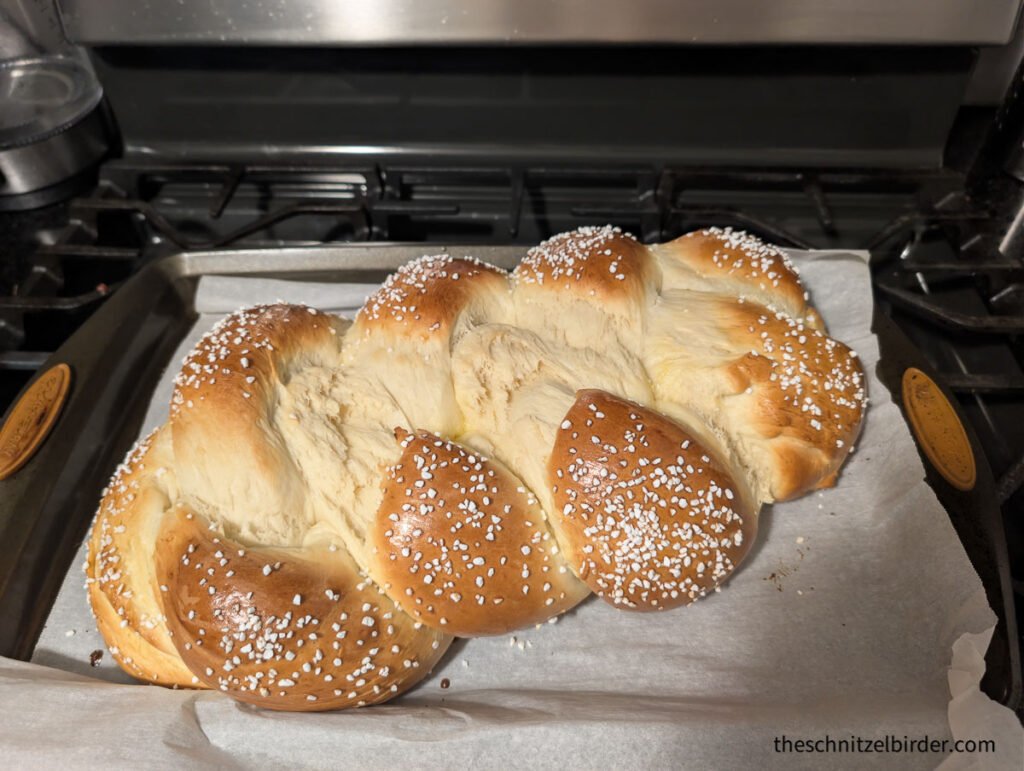
The long weekend gives families in Germany plenty of time to prepare one of the best meals: an Easter Brunch. Starting close to noon, everything which sounds like breakfast will be put on the table. This includes egg salad, fresh bread rolls, Hefezopf (yeast braid), deli meats, cheeses, fresh fruits and vegetables, soft and hard-boiled eggs, and so many more things! The centerpiece of a US Easter meal is the ham. Usually in a potluck style, one family will host the Easter lunch and prepare the ham, and everybody else just brings whatever they see fit. One time someone just brought freshly smoked pulled pork. A rather Swabian “Easter” thing are Maultaschen: they are meat-filled pasta, just like ravioli, but not quite.
Comparing Easter Candy in Germany and the USA
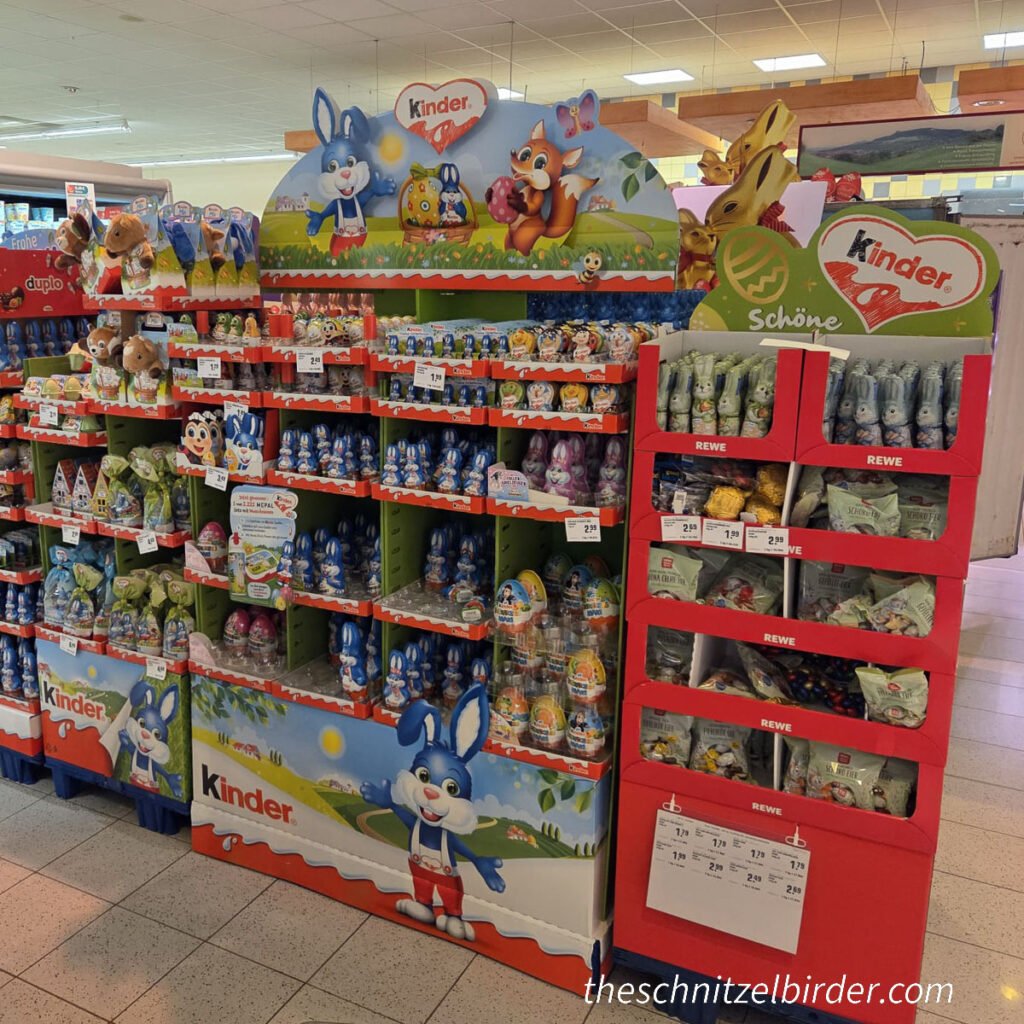
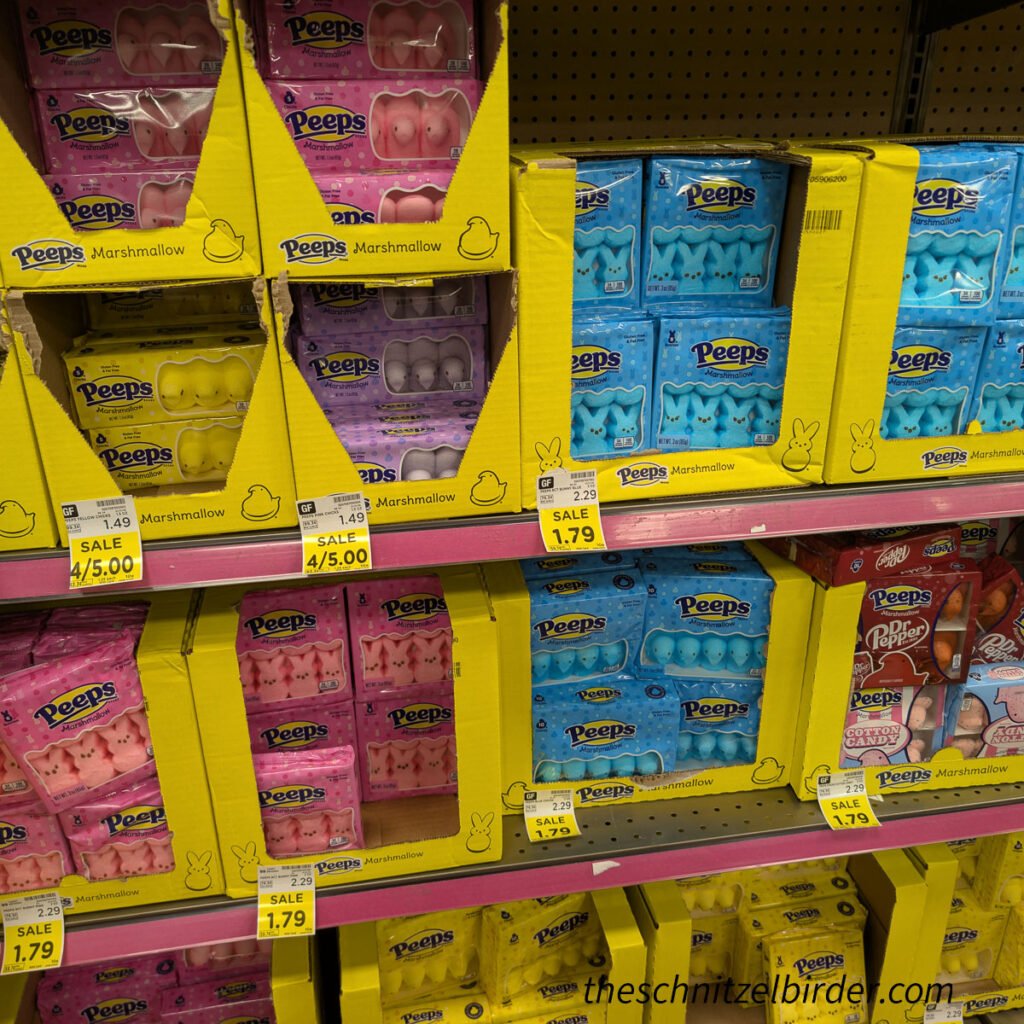
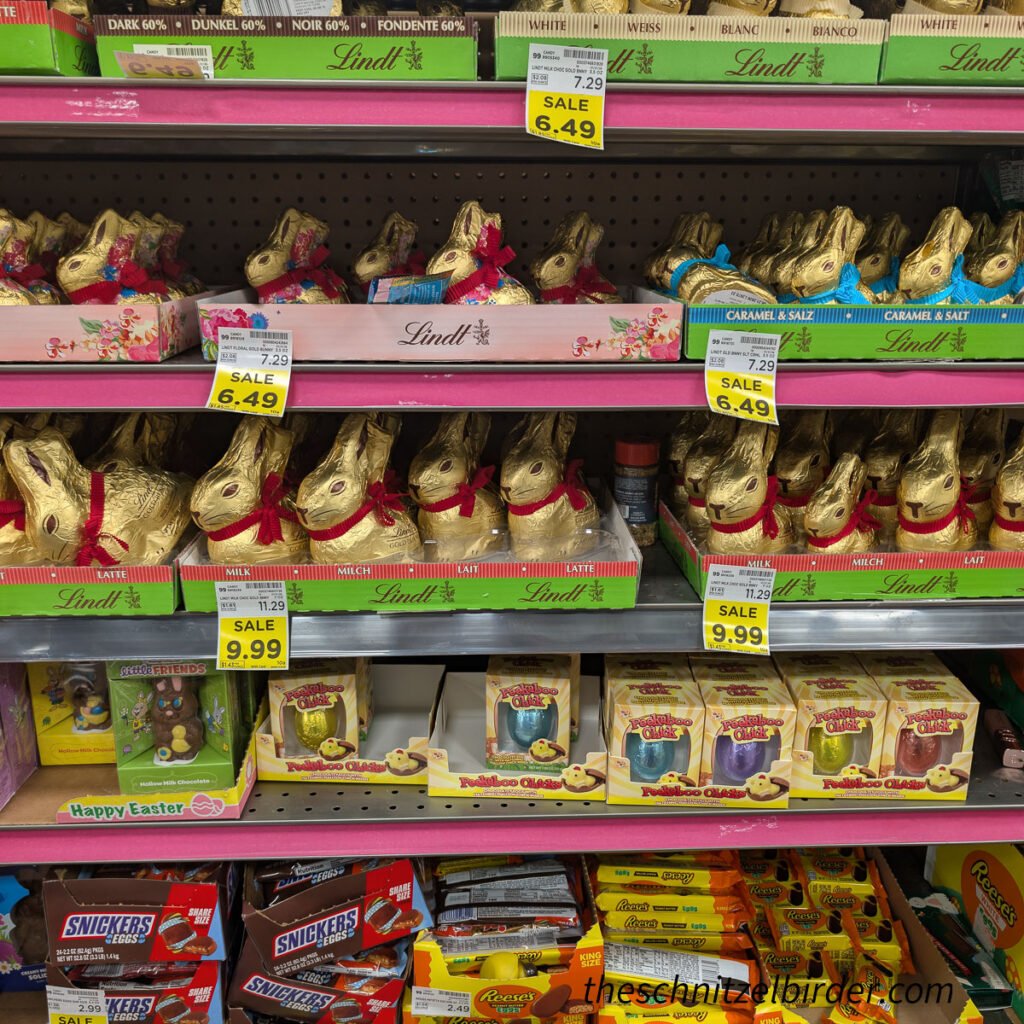
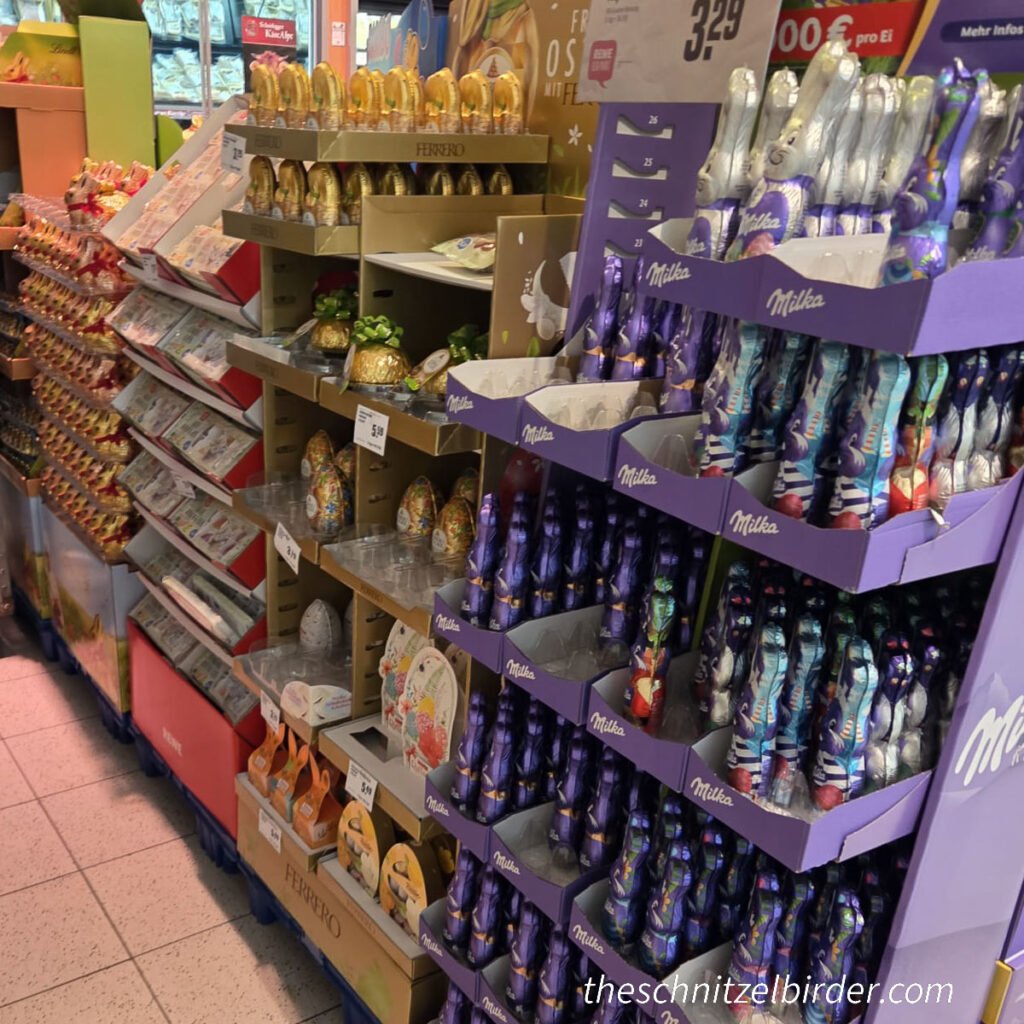
In the U.S., the candy aisle is dominated by “Peeps” (marshmallow chicks that people either love or hate), Cadbury Eggs, Reese’s Peanut Butter Eggs. In Germany, it’s all about the chocolate quality. You’ll find the gold-wrapped Lindt bunnies with their little red ribbons and bells everywhere, along with Kinder Surprise eggs and fine hazelnut pralines. You can also get the golden Lindt bunnies here, but the red ribbons comes without the bell. While the U.S. wins on quantity and sugary variety, Germany definitely takes the prize for the best chocolate.
Like in Germany, Easter in the US is not the most important holiday, but it definitely has its impression on culture. How do you celebrate Easter? 🥨🦉
Leave a Reply