Category: Recipes

  • Spätzle: The Swabian Answer to Italian Pasta!

    Spätzle: The Swabian Answer to Italian Pasta!

    Spätzle—the Swabian all-purpose weapon, the best thing since the invention of bread, and the ultimate comfort food. In Swabian literature, Spätzle is considered the Leibgericht der Schwaben, which translates to the “favorite dish of the Swabians.” I can only agree; Spätzle is one of my fondest childhood food memories, and it remains my favorite side dish to this day.

    But what exactly are Spätzle?

    To refer back to my opening sentence: they are a kind of pasta, but not quite. While Italian pasta often uses only semolina and no eggs, Spätzle leans very heavily on eggs and utilizes wheat flour. Furthermore, while pasta dough is typically quite dry and often dried further for later use, Spätzle dough is a “wet business.” It is almost always prepared fresh rather than dried.

    How are they made?

    The base is simple: mix wheat flour with eggs and salt. Depending on your preparation method, you might add a little water. There are three main ways to shape them: Geschabt, Gepresst, and Gehobelt.

    1. Geschabt (Scraped): This is the traditional method. The dough is scraped off a flat wooden cutting board into boiling water using a specific scraper. The dough for this variant usually contains no water at all—just flour, eggs, and salt.
    2. Gepresst (Pressed): My favorite way of making them. By using a hand press, you get very uniform, long Spätzle. It is relatively easy to do if you have a press handy. A little water is usually added to this dough.
    3. Gehobelt (Planed): This involves using a Spätzlehobel (a slider or plane). This is the most common method I see people using here in the US. You use a more liquid dough that is pushed through holes. In Germany, purists don’t even consider these “Spätzle”—they call them Knöpfle (little buttons). If you want a laugh, just look at any Facebook or Instagram post where someone calls Knöpfle “Spätzle”—the comment sections are hilarious.

    The Workout: Beating the Spätzle Dough

    The recipe I am sharing is for the pressed variant. The press I use is the Kull Spätzle-Schwob, which is a bit of a pricy import. If you are searching for one in the US, the Westmark Spätzle & Potato Press is a great alternative (and the brand my parents used).
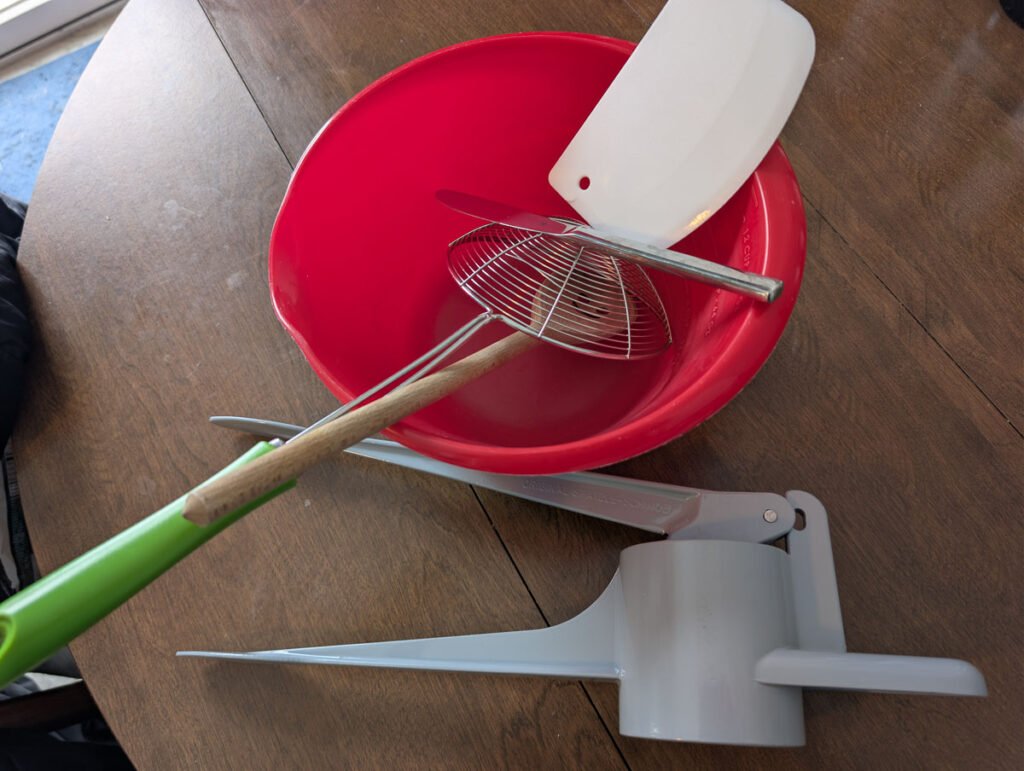
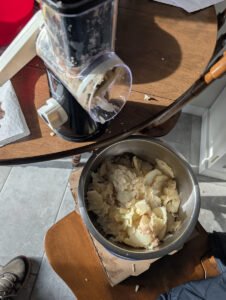
    All the tools I need: The press, a bowl, a strainer, a wooden spoon, a plastic scraper and a knife.

    When making the dough, you have to beat it in a bowl with a cooking spoon. I prefer a wooden spoon with a hole in the middle. The texture of the dough will turn your cooking session into a workout! You know the dough is ready when it starts to form large bubbles.

    Once the dough has rested and your salted water is boiling, the second part of the workout begins. You fill the press and squeeze the Spätzle into the water as quickly as your strength allows. Pro Tip: Dip your kitchen knife into the boiling water before using it to cut the dough off the press—it prevents sticking!
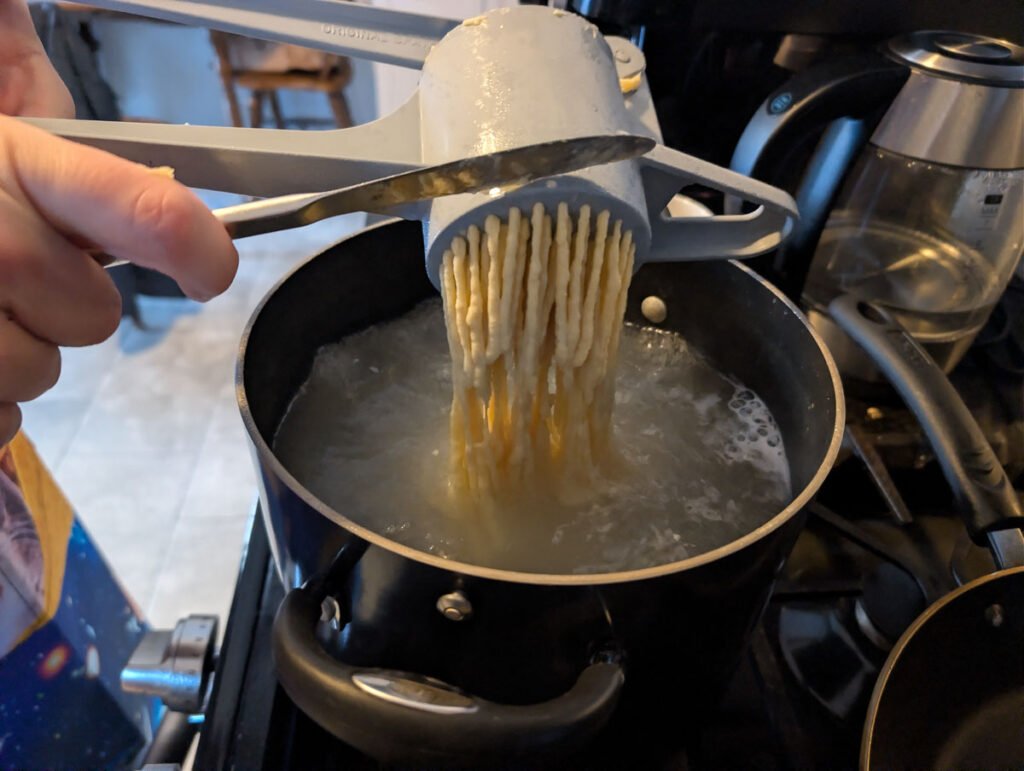
    “Cutting” off the Spaetzle.

    Spring is in the air! Red-winged Blackbirds are back at Metrobeach. See the latest on nesting Great Horned Owls, Wood Ducks, and my favorite birding trails. 🥨🦉

    Red-winged Blackbird at Lake St Clair Metropark

    I hope you enjoy this recipe.

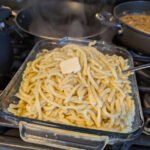
    Spaetzle, the ultimate Swabian Comfort Food

    This is a recipe for spaetzle made with the spaetzles press.
    Prep Time15 minutes
    Cook Time10 minutes
    Resting Time30 minutes
    Total Time55 minutes
    Course: Main Course, Side Dish
    Cuisine: German, Swabian
    Keyword: Comfort food, german, side dish, swabian
    Servings: 6 servings
    Calories: 485kcal

    Ingredients

    • 5 cups All-purpose flour
    • 6 large eggs
    • ½ cup water
    • 1 tsp salt

    Instructions

    • Mix: Combine flour, eggs, and salt in a large bowl.
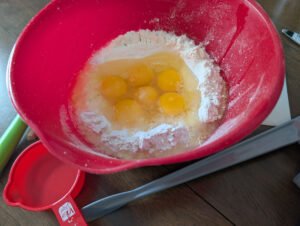
      Spaetzle: Combining the ingredients
    • Beat: Add water in small increments while beating the dough vigorously with a wooden spoon. Stop adding water when the dough is elastic and "tough." Keep beating until you see air bubbles forming in the dough. If the dough is too thick, just add a little bit more water.
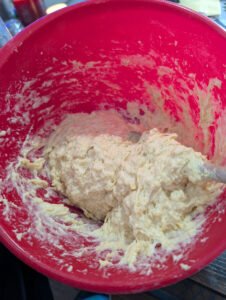
      Beating the dough!
    • Rest: Let the dough sit for about 30 minutes.
    • Boil: Bring a large pot of heavily salted water to a boil.
    • Press: Fill your Spätzle press. Squeeze the dough into the boiling water and cut it off with a wet knife.
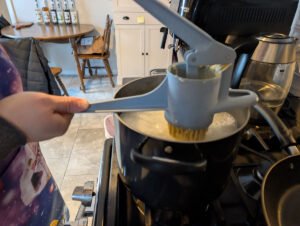
      Pressing the Spaetzle
    • Strain: As soon as the Spätzle float to the top (which happens almost instantly), they are done. Remove them with a strainer spoon.

      Straining the Spaetzle
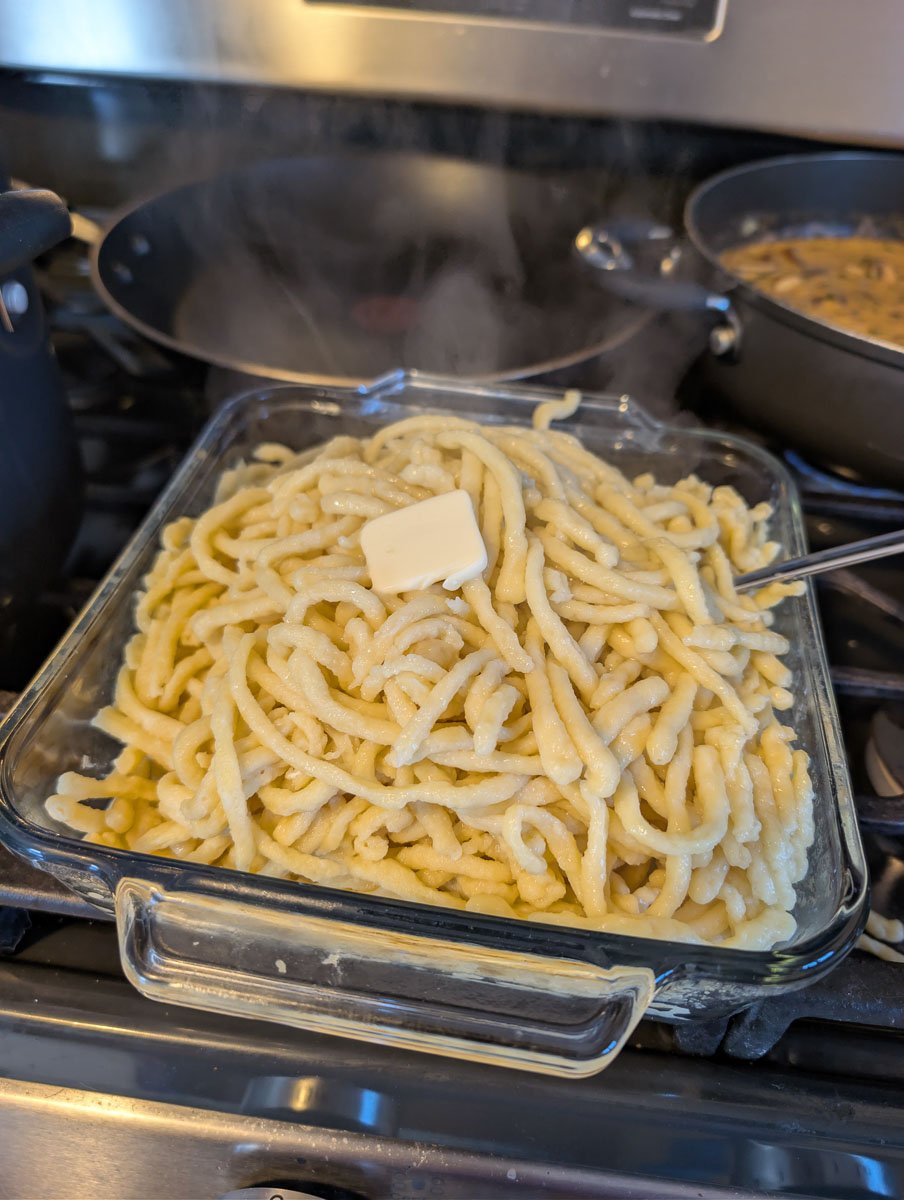
    • Toss: Place them in a warm bowl and toss with butter immediately so they don't stick together.

    Notes

    Caloric Breakdown (Per Serving)

    • Calories: 485 kcal
    • Carbohydrates: 74g
    • Protein: 16g
    • Fat: 12g (includes butter for tossing)

    More Swabian Essentials


    Swabian Potato Salad Kohlrabi with Fleischkuechle (Swabian Meatballs) ○ Sauerbraten (Sour Roast)
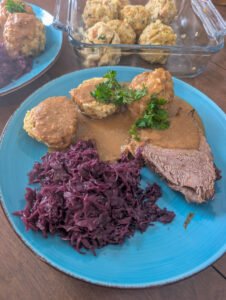
    Sauerbraten with bread dumplings and red cabbage

    Now what?

    Spätzle are the ultimate side dish in Swabia. They go perfectly with Schnitzel and mushroom gravy, Lentil Stew (stay tuned for that recipe!), Goulash, or even as a standalone dish like Kässpätzle (cheese Spätzle with sautéed onions).

    You can even vary the dough by adding liver (for Leber-Spätzle), or spinach and herbs for a vibrant green color and earthy taste.

    Before you serve your fresh spätzle, A final tip for easy clean-up: Immediately soak your bowl, press, and any used utensils that were in contact with the dough in cold water (this prevents the egg and flour from setting like glue). You do not want to let the dough dry, unless you’re looking to add an unwanted third round to your kitchen workout!

    Lentils with Spaetzle and Wiener (Saitenwuerste)

    What is your favorite Spätzle topping? Are you a “Press” fan or a “Hobel” traditionalist? Let me know in the comments! 🥨🦉

    Graving another traditional Swabian/German side? Check out my Swabian potato salad or the Bread Dumplings!
  • The Schnitzel Masterclass: A German Childhood Favorite

    The Schnitzel Masterclass: A German Childhood Favorite

    I would not be The Schnitzel Birder if I didn’t have a Schnitzel in my repertoire. For me, Schnitzel is probably the most German food I can imagine—it is one of the few items that connects every local cuisine across the country. You can get a Schnipo (Schnitzel with Pommes—fries) from Lake Constance all the way up to Kiel. In addition, nearly every Italian, Greek, or Balkan restaurant in Germany has some form of it on the menu. Because everybody knows: The Germans love their Schnitzel!

    Little disclaimer: I am an amateur sharing my experience to other amateurs – in case Masterclass causes some confusion 🙂

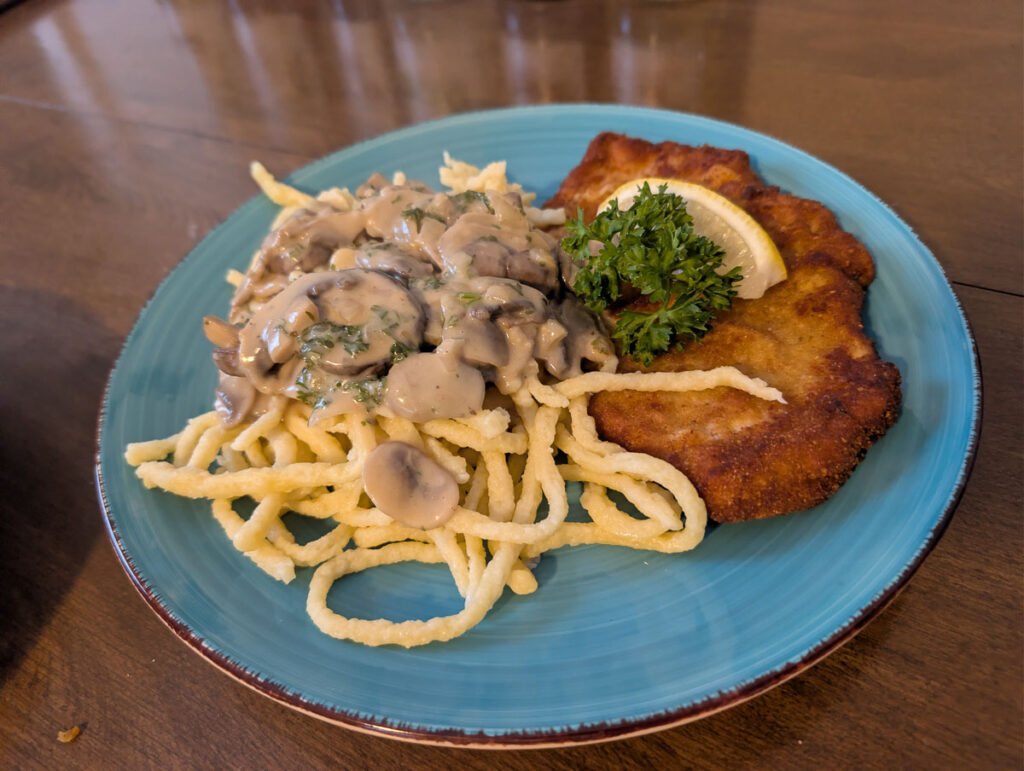
    Schnitzel with Spaetzle and Jaegersauce (Jaegerschnitzel)

    Memories of the “Gasthof zur Sonne”

    One of my earliest memories goes back to the “Gasthof zur Sonne” in my hometown, Weilheim an der Teck. It was a restaurant with good Swabian food, massive portions, and a host named Otto who, to my child-self, seemed very grumpy. Looking back, I realize he wasn’t grumpy; he was just an authentic Swabian.

    My go-to was the Schnitzel with fries and dark gravy. Even as a little kid, I always ordered the adult portion, and most of the time, I finished the whole plate. Today, that same building houses a Döner Kebab place, but even they have it on the menu: Schnitzel with fries!
    What is a Schnitzel?

    Some argue the Schnitzel is strictly Austrian (the famous Wiener Schnitzel or Vienna Schnitzel). While I agree with the history, over the centuries, it simply became THE German dish.

    Essentially, a Schnitzel is a thin slice of meat—poultry, pork, or veal (rarely beef)—breaded and pan-fried. The original Vienna version uses veal, but in German home kitchens, pork loin is the standard of the weeknight dinner.

    Preparing the Meat: The Butterfly and the Hammer

    I like to use pork loin. If you buy them pre-sliced, they are usually 1/2 to 3/4 of an inch thick—way too thick for a Schnitzel! You have two techniques to reach that perfect thickness:

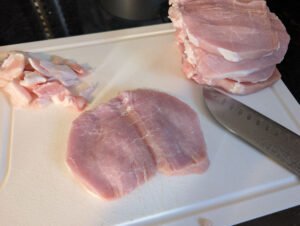
    1. Butterfly Cut: Slice the meat almost all the way through parallel to the board, then open it up like a book. This creates a larger, thinner, and more uniform piece.
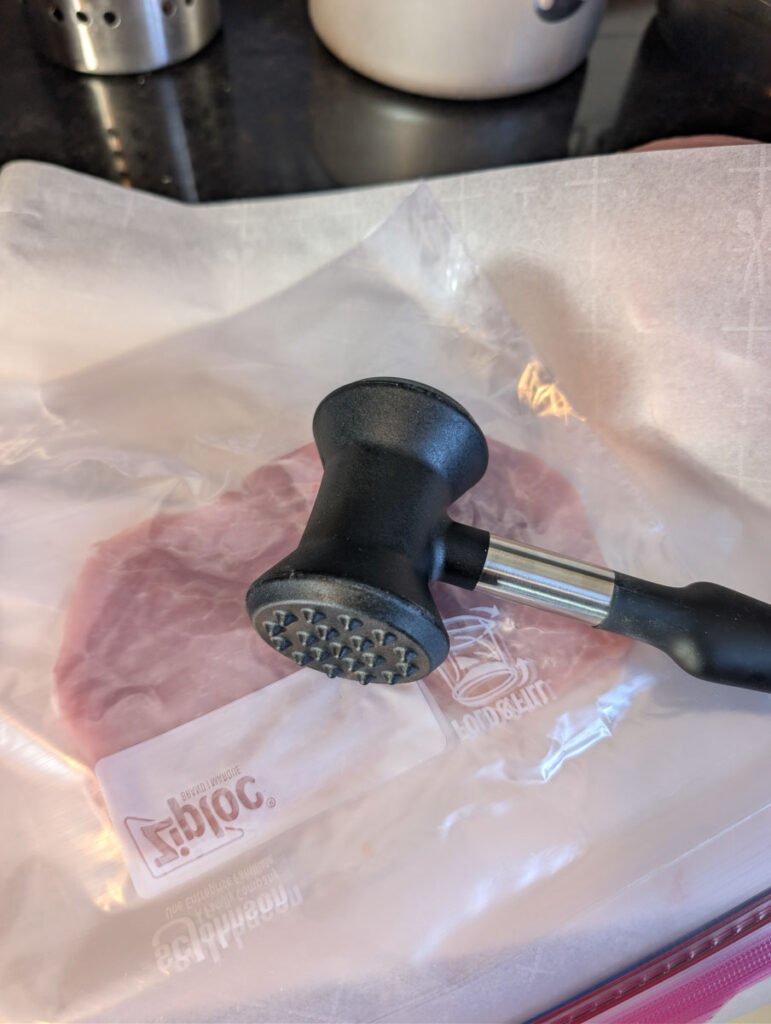
    2. Tenderizer: Beating the meat with a tenderizer hammer! If you don’t have a specific hammer, any heavy, sturdy kitchen object will do.

    In my humble opinion, tenderizing isn’t optional—it breaks down the fibers to ensure the meat is fork-tender. And it is fun to do!

    Tenderizer making the Schnitzel flat and tender!

    The Panierstraße (The Breading Line)

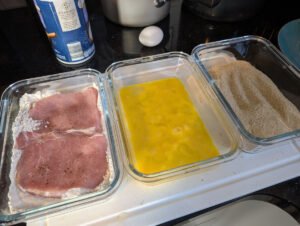
    Once the meat is flattened, it’s time for the Panierstraße. This is a series of three containers:

    1. Flour & Seasoning: I season the meat directly first, but I also add seasoning to the flour.
    2. Egg Wash: Whisked eggs to act as the “glue.”
    3. Bread Crumbs: Be generous! This is where that crispy crust comes from.

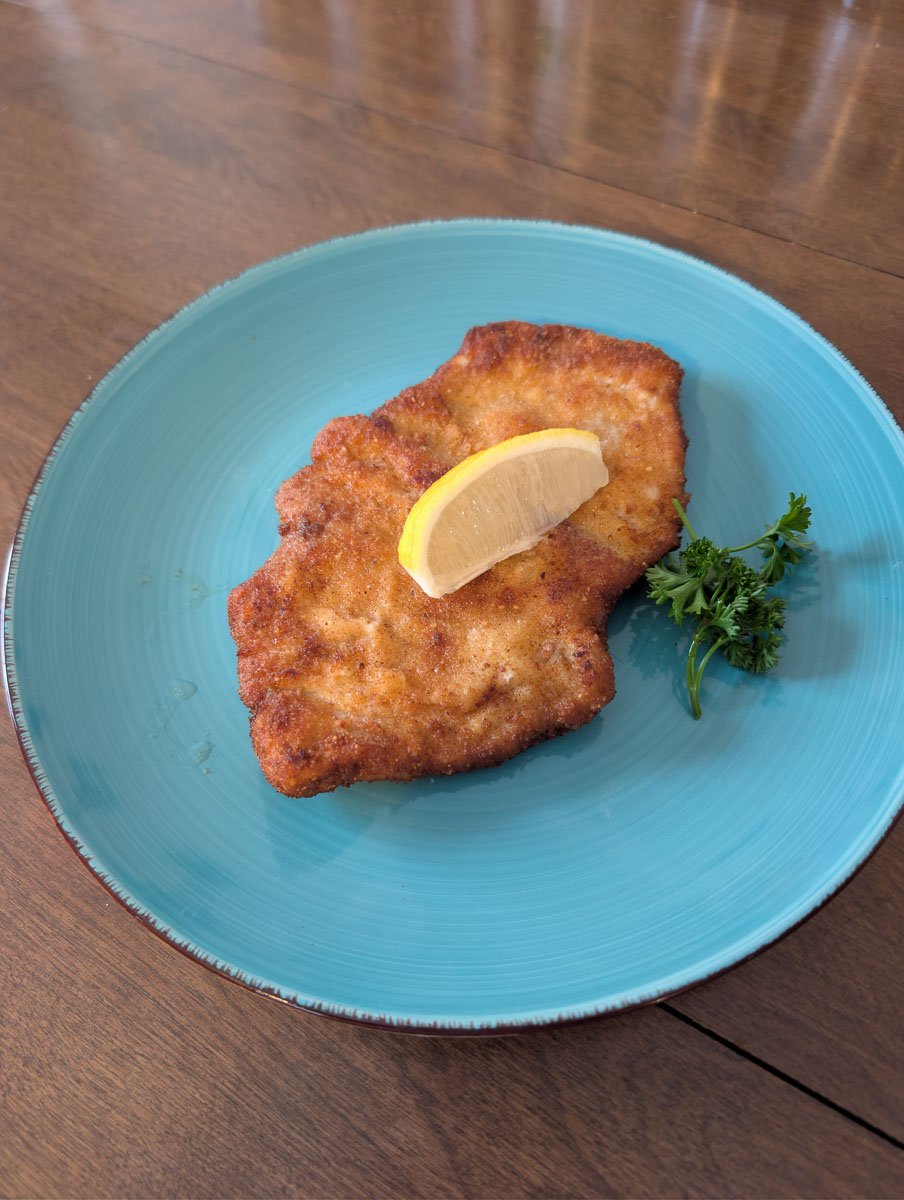
    Das Schnitzel – THE German dish.

    Master the authentic German Schnitzel! Learn the Panierstraße method and the "swirl" trick for a perfect soufflé crust. The ultimate comfort food guide. 🥨🦉
    Prep Time20 minutes
    Cook Time8 minutes
    Course: Main Course
    Cuisine: German, Swabian
    Keyword: german, schnitzel, swabian
    Servings: 4 servings
    Calories: 520kcal
    Author: Hannes

    Ingredients

    • 4 Pork loin cutlets approx. 5-6 oz each
    • 1/2 cup All-purpose flour
    • 2-3 Large eggs beaten
    • 1.5 cups Bread crumbs preferably homemade from stale rolls!
    • Salt and Pepper to taste
    • 1 tsp Paprika optional, for the flour mix
    • 1 cup Clarified butter or vegetable oil for frying
    • 1 Lemon cut into wedges for serving

    Instructions

    • Flatten: Use the butterfly cut if the meat is thick, then pound the cutlets between two sheets of plastic wrap until they are about 1/4 inch thick.
      Butterfly Cut
    • Season: Generously salt and pepper both sides of the meat.
    • Set up the Panierstraße: Place flour (mixed with paprika) in the first dish, beaten eggs in the second, and bread crumbs in the third.
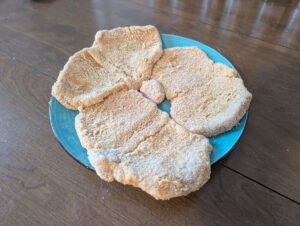
    • Bread: Dredge the meat in flour (shake off excess), dip in egg, and finally coat in bread crumbs. Do not press the crumbs into the meat—you want them to sit loosely so they can "soufflé" or puff up.
      Breaded Pork Loin
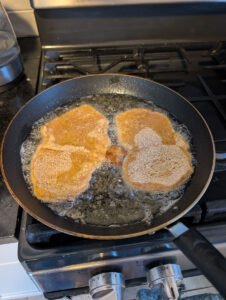
    • Fry: Heat oil in a large skillet over medium-high heat. You need enough oil so the Schnitzel can "swim."
    • The Swirl: Once the oil is hot (around 340°F), carefully lay the Schnitzel in. Shake the pan gently in a circular motion so the hot oil washes over the top of the breading.
      Schnitzel in the making!
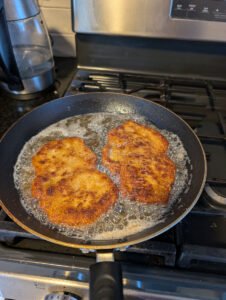
    • Finish: Fry for 3-4 minutes per side until golden brown. Drain briefly on paper towels.
      Schnitzel good to go :)

    Now what?

    Serve with a lemon wedge and a side of your choice. While fries are the classic childhood choice, nothing beats the “Schnitzel Trifecta”: Schnitzel, Spätzle, and Jägersauce (Creamy Mushroom Sauce).

    Other side option would be my Mayo-free Potato Salad!

    Craving German food but not making it yourself? Try these German restaurants in the Detroit metro!

    Did you enjoy my Schnitzel recipe? Let me know, and leave a comment below! 🥨🦉

  • German Kohlrabi in Cream Sauce with Meatballs (Swabian Fleischküchle)

    German Kohlrabi in Cream Sauce with Meatballs (Swabian Fleischküchle)

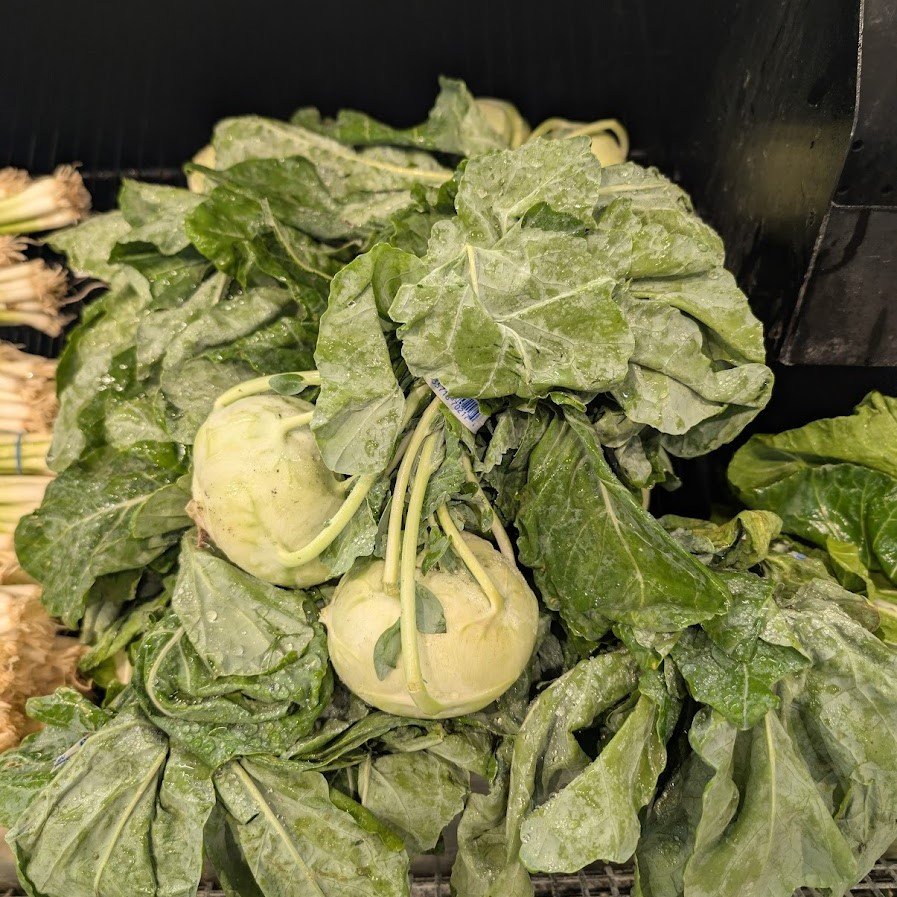
    Kohlrabi: The Alien of the Produce Aisle

    • What is Kohlrabi? It’s a member of the cabbage family (Kohl + Rabi / Cabbage-Turnip). While I see a lot of ingredients that are quite exotic to me find their way into many American kitchens, I have the feeling Kohlrabi is quite the outsider. All of the people I asked said they had never even heard of it, or they saw it in a store but didn’t know what it was. 
    • Where to buy? When I first came to the US, I realized that there was no Kohlrabi anywhere, unlike in German supermarkets where it is a staple. Only two years ago, I found Kohlrabi at Meijer by coincidence. I didn’t even hesitate—I grabbed a few of the largest bulbs, though I wasn’t thinking about cooking them yet—no, just as a quick, crunchy, and healthy snack to eat raw. Since then, I’ve learned that nearly every Meijer has Kohlrabi and I’ve also started seeing seedlings being sold at Farmers Markets.
    • Handling: When you get your hands on Kohlrabi, be prepared for some work. The outer layer is tough and woody. You do not want this in your meal later, as you cannot really cook it tender. Use a sharp knife rather than a vegetable peeler, and don’t be afraid to peel deep until you reach the light-green, succulent center.

    For this recipe, we will peel the Kohlrabi, cut it into fry-shaped sticks, and cook it in salty water. Later we will serve it with a white bechamel sauce and Fleischküchle

    Kohlrabi in the storeshelf
    Kohlrabi in the storeshelf

    What is a Fleischküchle?

    In other parts of Germany, they are known as Bulette or Frikadelle. Many people believe they are the reason the Hamburger exists today—when German immigrants brought the “Hamburg-steak” to America and eventually combined it with a bun. When I was a child, my parents would actually make Hamburgers using Fleischküchle instead of a plain beef patty, which is a variation I highly recommend trying!

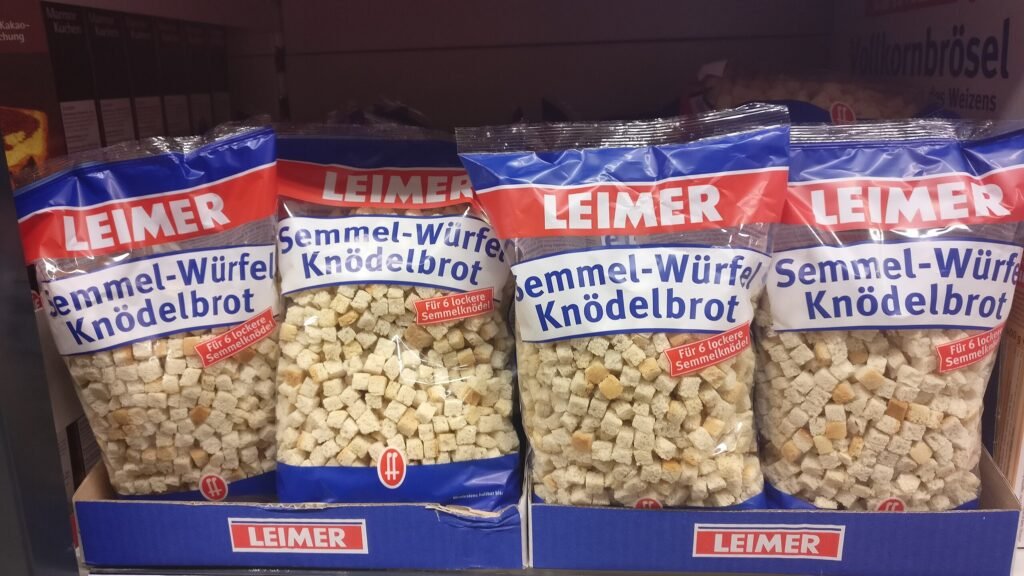
    The Bread Hack: The dry bread part is usually handled by buying “Knoedelbrot” in Germany. In the US, I did not find an equivalent to just buying a bag of cubed dry bread, but there is a simple solution: Just buy bread, cube it, and let it go stale (white bread works best!).

    It’s the perfect way to use up a loaf that’s past its prime. At my childhood home, we always kept old bread rolls and bread slices, storing them away to be used when needed. As soon as it seemed like we had more than we would ever need for Fleischküchle, Maultaschen, or Knoedel, we would grind them down into breadcrumbs for our next Schnitzel session. Nothing went to waste.

    Knodelbrot in the storeshelf in Germany
    Knodelbrot on the storeshelf in Germany

    Side Option: Salted Potatoes

    Just take some festkochende (waxy) potatoes like Yukon Gold or Red Potatoes—I explain the differences between potato types in my Potato Salad post —peel them, cube them, and cook them in salty water.


    Spring is in the air! Red-winged Blackbirds are back at Metrobeach. See the latest on nesting Great Horned Owls, Wood Ducks, and my favorite birding trails. 🥨🦉

    Red-winged Blackbird at Lake St Clair Metropark

    Kohlrabi with Fleischküchle

    Kohlrabi (cabbage) in a creamy bechamel sauce with Fleischkuechle (German Meat Pie)
    Prep Time25 minutes
    Cook Time35 minutes
    Course: Main Course
    Cuisine: German, Swabian
    Keyword: Fleischkuechle, german, Kohlrabi, Meat Pie, swabian
    Servings: 6 servings
    Calories: 600kcal

    Ingredients

    Kohlrabi

    • 3 to 5 Kohlrabi bulbs they can vary in size!

    Fleischkuechle

    • 5 oz of cubed dry bread
    • 1 lb Minced pork-beef mixture
    • 1 cup onions chopped (about one smaller onion)
    • 1/2 cup Parsley chopped
    • 3 Eggs
    • Salt and pepper
    • Potentially breadcrumbs to adjust the texture

    The Sauce

    • 4 tbsp butter
    • ¼ cup all-purpose flour
    • ¼ quart half & half
    • 1/2 quart of the cooking water from the kohlrabi
    • 1 teaspoon salt or to taste
    • ¼ teaspoon freshly grated nutmeg or to taste

    Instructions

    Kohlrabi and Bechamel Sauce

    • Peel the kohlrabi and cut into fries shaped sticks. Boil kohlrabi sticks in salted water (10-15 mins). Drain, saving 1/2 quart of liquid.
      Peeled and cut Kohlrabi
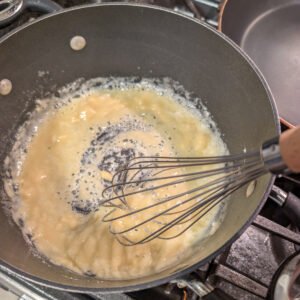
    • Melt the butter in a pan and make a roux with by adding the flour. Slowly whisk in half & half and reserved cooking water.
      Making a roux.
    • Season with salt and nutmeg.
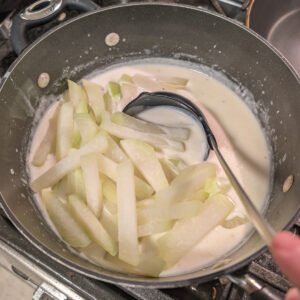
    • Fold kohlrabi into the sauce.
      Folding in the Kohlrabi.

    Fleischküchle

    • Soak bread in warm water, then squeeze completely dry. Briefly sauté the onions in some oil/butter.
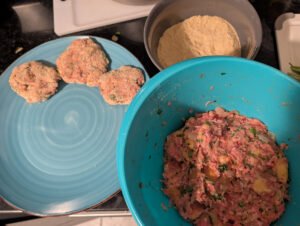
    • Mix meat, squeezed bread, egg, onions, parsley, and spices. Add breadcrumbs to adjust texture.
    • Form into flat patties. Coat briefly in breadcrumbs.
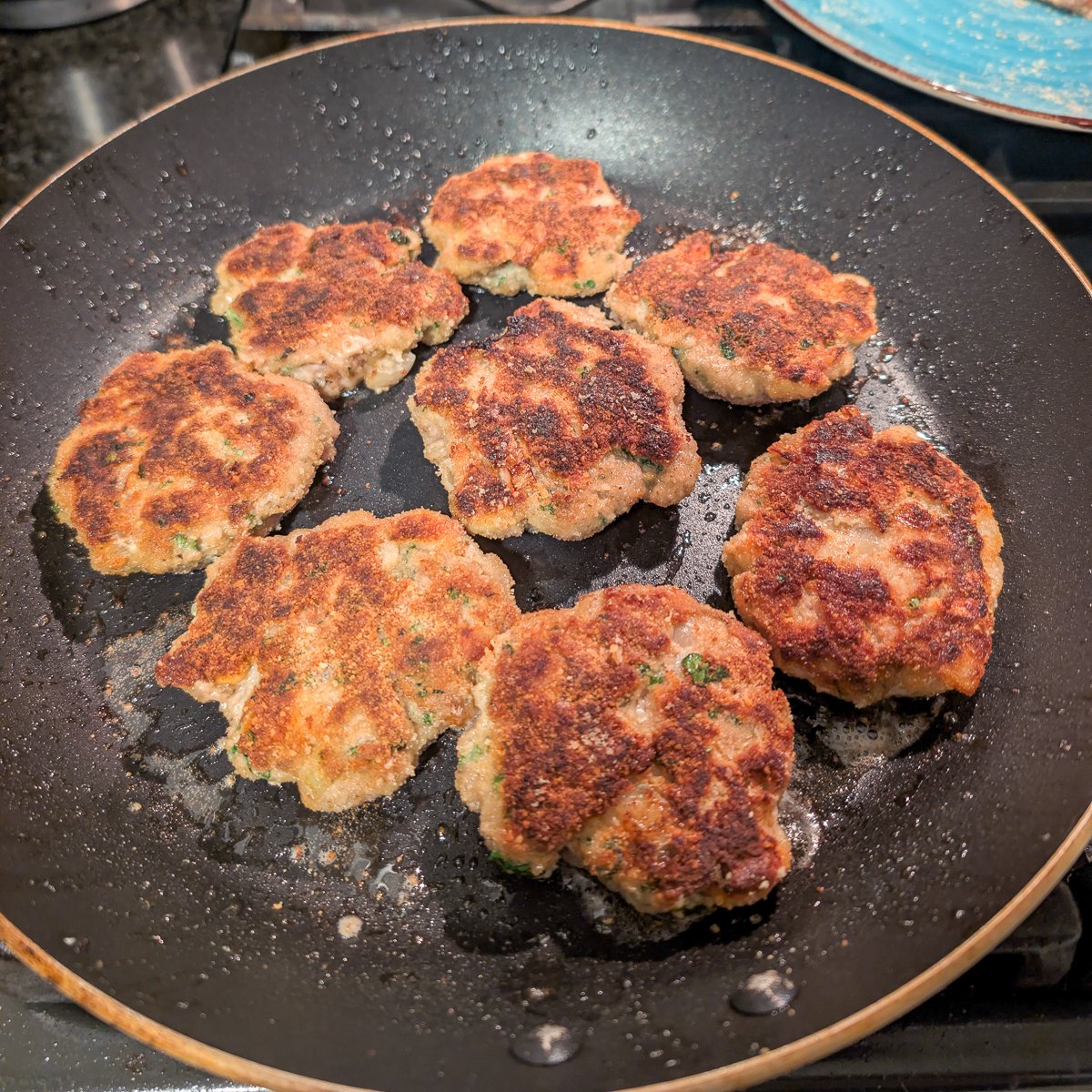
    • Pan-fry in oil/butter until dark brown and crispy (approx. 6 mins per side).
      Pan Frying the Fleischkuechle

    Serving

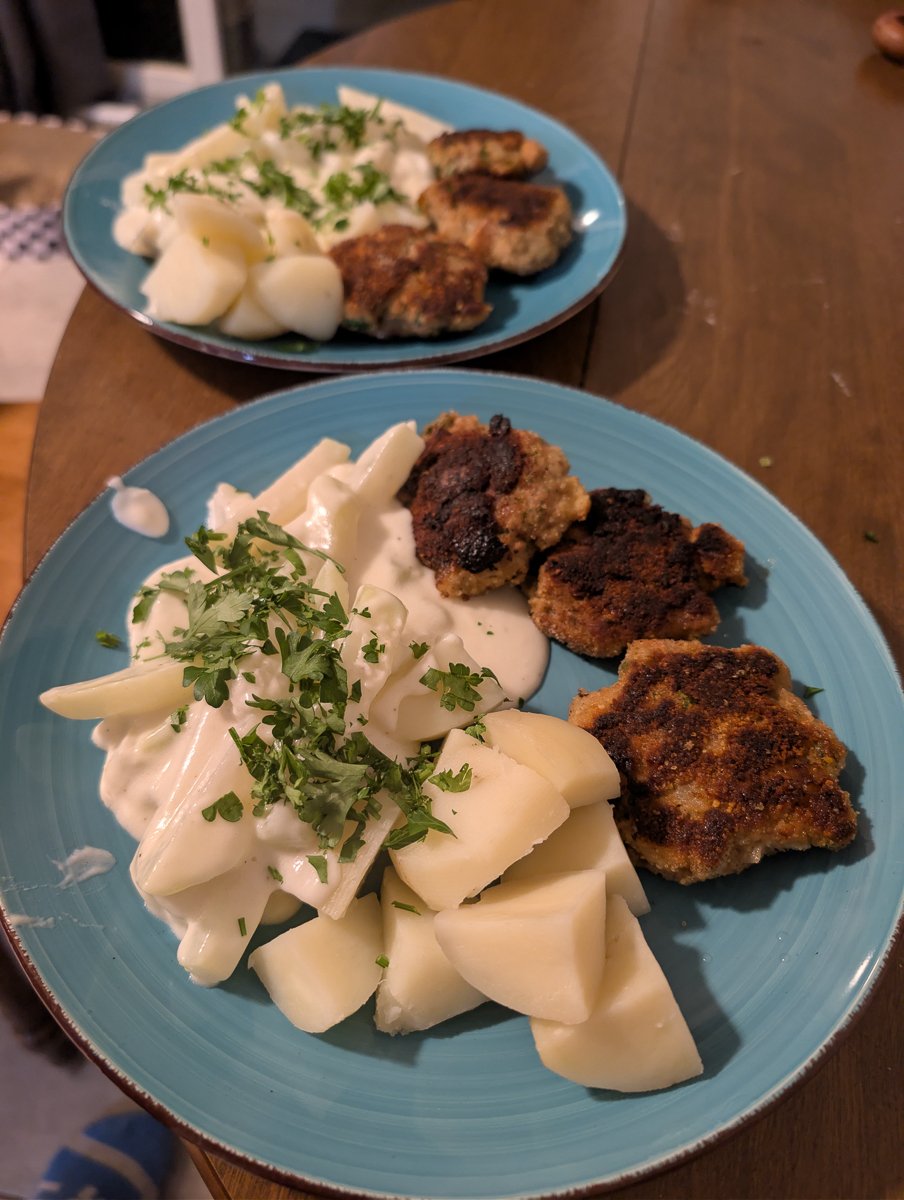
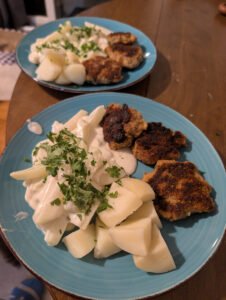
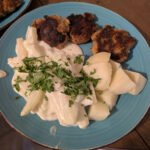
    • Serve both on a plate. Sprinkle fresh chopped parsley as a garnish.
      Serving with salty potatoes

    Notes

    You can coat the Fleischküchle in the breadcrumbs to give them an even crispier texture!
    Serving recommendation: Add a side of salty potatoes!

    If you are looking for other Swabian Recipes, you can try my traditional Mayo-Free Potatoe Salad. Craving a comforting soup, check out our Avgolemono recipe.

    More Swabian Essentials


    Swabian Potato Salad Kohlrabi with Fleischkuechle (Swabian Meatballs) ○ Sauerbraten (Sour Roast)

    Sauerbraten with bread dumplings and red cabbage
  • Fleischküchle: The Swabian Ancestor of the Hamburger

    Fleischküchle: The Swabian Ancestor of the Hamburger

    What is a Fleischküchle?

    In other parts of Germany, they are known as Bulette or Frikadelle. Many people believe they are the reason the Hamburger exists today—when German immigrants brought the “Hamburg-steak” to America and eventually combined it with a bun. When I was a child, my parents would actually make Hamburgers using Fleischküchle instead of a plain beef patty, which is a variation I highly recommend trying!

    The Bread Hack: The dry bread part is usually handled by buying “Knoedelbrot” in Germany. In the US, I did not find an equivalent to just buying a bag of cubed dry bread, but there is a simple solution: Just buy bread, cube it, and let it go stale (white bread works best!).

    Knodelbrot in the Storeshelf

    It’s the perfect way to use up a loaf that’s past its prime. At my childhood home, we always kept old bread rolls and bread slices, storing them away to be used when needed. As soon as it seemed like we had more than we would ever need for Fleischkuechle, Maultaschen, or Knoedel, we would grind them down into breadcrumbs for our next Schnitzel session. Nothing went to waste.

    Fleischküchle can be used as a finger food snack served cold, as well as part of a warm dish, like Kohlrabi with Fleischküchle or as mentioned above as a more hearty patty for your next home-made Hamburgers!

    Fleischküchle: A Swabian classic

    This is a super easy Fleischküchle recipe. Fleischküchle are also known as Frikadellen or Buletten.
    Prep Time10 minutes
    Cook Time24 minutes
    Course: Appetizer, Finger Food, Main Course
    Cuisine: German, Swabian
    Keyword: appetizer, easy, german, german appetizer, main course, swabian
    Servings: 6 servings
    Calories: 375kcal
    Author: Hannes

    Ingredients

    • 5 oz of cubed dry bread
    • 1 lb Minced pork-beef mixture
    • 1 cup onions chopped
    • 1/2 cup Parsley chopped
    • 4 Eggs
    • Salt and pepper
    • Potentially breadcrumbs to adjust the texture

    Instructions

    • Soak bread in warm water, then squeeze completely dry. It is important that all the liquid which can be squeezed is out of the bread! Briefly sauté the onions in some oil/butter.
    • Mix meat, squeezed bread, egg, onions, parsley, and spices.
    • Form into flat patties.
    • Pan-fry in oil/butter until dark brown and crispy (approx. 6 mins per side).

    Notes

    This recipe yields approximately 12 small Fleischküchle. You can make “mini” Fleischkuechle and serve them cold for finger food or as a appetizer.
    You can coat the Fleischküchle in the breadcrumbs to give them an even crispier texture!
    When using ground turkey adjust the amount of bread since turkey brings in a very “wet” texture. Alternativeley when your meat dough is too liquidy you can treat it like a pancake dough and scoop it into your pan.

    On the search for a Swabian side to go with your Fleischküchle? Check out my recipe for Swabian Potato Salad.

    Looking for other German Appetizers? Checkout those puff pastry snack snails!

    I hope you enjoyed my families recipe for Fleischküchle. Got any comments? Leave them below!

  • Greek Classic in a Michigan Kitchen: Veggie-heavy Homemade Avgolemono

    Greek Classic in a Michigan Kitchen: Veggie-heavy Homemade Avgolemono

    My fiancé Ali introduced me early to her absolute favorite soup: The Avgolemono—a soup which utilizes eggs (avgo) and lemons (lemono) as its main characteristics. Even though we have plenty of Greek restaurants and a big Greek population in my home area, I never stumbled upon this soup before. While adding some egg into a soup was nothing new to me, adding lemon, on the other hand, sounded a bit foreign.

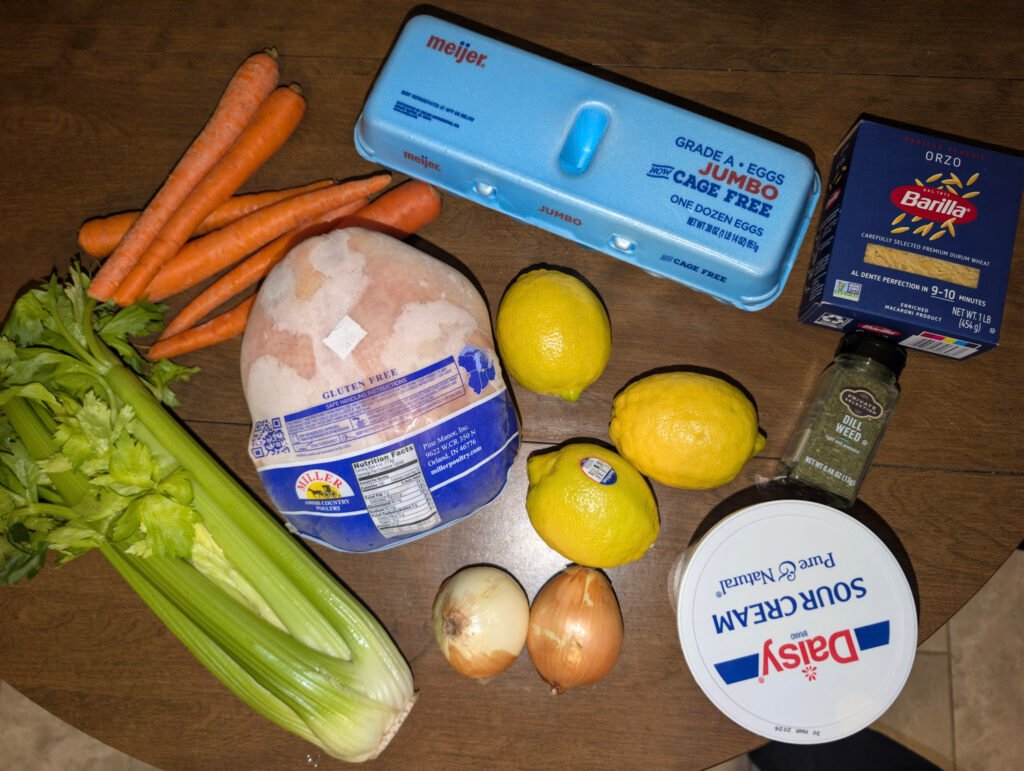
    Avgolemono Ingredients
    Avgolemono Ingredients

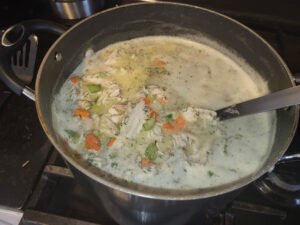
    Our take on Avgolemono!

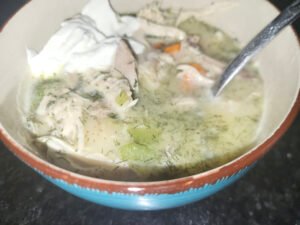
    Ali’s take on the soup is more vegetable-heavy than most traditional recipes. Many versions don’t have any vegetables in the finished product at all. Ours is different: we add a good amount of cubed carrots and celery. Another important difference to most recipes is the seasoning: we do not season the soup with any salt or pepper before serving. The salt is added fresh onto the soup when served, just before adding a spoonful of cold sour cream. The combination of the not-yet-diluted salt, cold sour cream, and hot, sour soup creates a whole different taste experience on your tongue. But even without salt and sour cream, the combination of lemon, egg, and dill already creates a fantastic taste!

    Technical Section: Tempering & Troubleshooting

    Before we head to the recipe, two little technical hints:

    • The Tempering: This is arguably the most vital step in this entire recipe. Once you have frothed the eggs and added the lemon juice, you must gradually raise the temperature of the mixture without having “cooked eggs” with solid pieces (curdling). This is done by slowly drizzling hot broth into the egg mixture while whisking constantly. If you’re nervous about the eggs curdling, start with very small increments—like a half-ladle—until the bowl feels warm to the touch.
    • The “Orzo Sponge”: The next day, your Avgolemono will have a more stew-like texture because the orzo soaks up all the liquid. Our trick is just to add some water or broth if you’re worried about watering it down too much. Or simply enjoy it in this new stew-like form!

    Veggie heavy Avgolemono Soup (Greek lemon soup with lots of vegetables)

    A simple avgolemono soup recipe which has more veggies than the traditional ones
    Prep Time30 minutes
    Cook Time1 hour 30 minutes
    Course: Main Course, Soup
    Cuisine: Greek
    Keyword: avgolemono, chicken, soup
    Servings: 8 servings
    Calories: 365kcal

    Ingredients

    For the stock:

    • 1 Whole chicken or bone-in pieces
    • 1-2 Carrots
    • 1-2 stalks Celery
    • 2 Onions halved
    • Peppercorns and a bay leaf

    For the Soup:

    • 10 cups Fresh chicken stock strained from above
    • Chicken all the meats
    • 2 cups Carrots cubed
    • 2 cups Celery cubed
    • 1 cup Onions chopped
    • ½ cups Orzo
    • 3-4 Large eggs
    • 3 Lemons juiced
    • Fresh Dill preferably

    Serving

    • Salt, Pepper and Sour Cream Added at the table

    Instructions

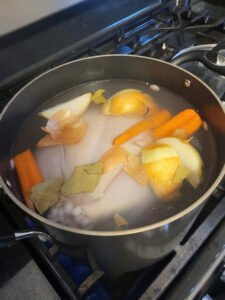
    • Preparing The Stock: Simmer chicken and stock veggies in water for 60-90 mins. Shred meat, strain broth, and discard boiled veggies. In the meantime, you can cube your fresh veggies, squeeze the lemons, and chop the dill.
      The stock in the making
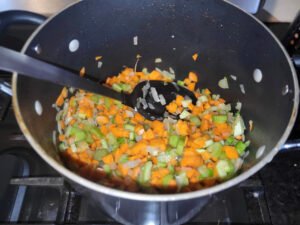
    • The Veggies & Noodle: Sautee the onions and add the other vegetables. Add 10 cups of stock and boil the fresh cubed carrots and celery in the. Add Orzo and cook until tender.
      Sauteing the onions and adding the veggies
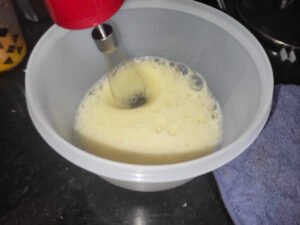
    • The Avgolemono: Whisk the eggs until frothy, then add the lemon juice.
      Frothing up the eggs
    • Tempering: Slowly whisk 2-3 ladles of hot broth into the egg mixture.
      Frothed up eggs with lemon juices
    • The Merge: Stir the tempered mixture back into the pot over low heat. Do not boil.
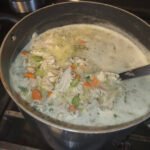
      The mixed up avgolemono soup
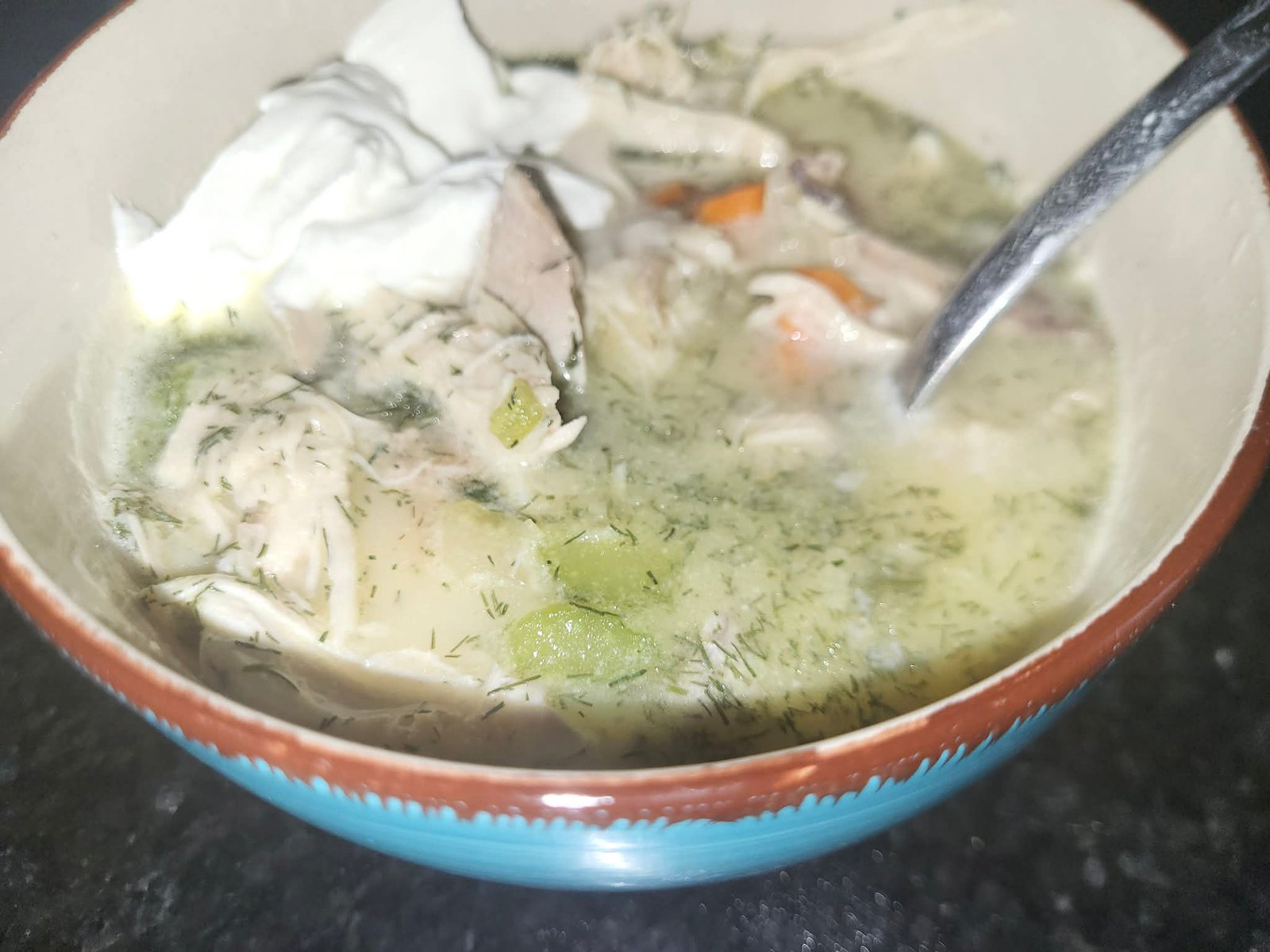
    • The Finish: Fold in the shredded chicken and dill. Serve with a tablespoon of sour cream and season individually with salt and pepper at the table.
      Ready to eat avgolemono soup with sour cream

    Notes

    This recipe uses more vegetables than most more traditional ones. We do not season with salt and pepper during the cooking, which gives you the opportunity to have a low sodium meal. 
    For the stock this is just a base recipe. Basically you can do whatever you like. E.g. add more or different vegetables. Back in Germany I always liked to add leeks and parsley root. If you can get get celery root, that will also intensify the vegetable flavor of the broth.
    More nutritional information:
    • Protein: 32g (mostly from the 2 lbs of chicken and eggs)
    • Carbohydrates: 22g (from the orzo and vegetables)
    • Fat: 16g (depending on how lean the chicken/stock is)

    Thank you for checking out this recipe! Leave a comment below if you tried it!

    Also checkout my Snack Snail recipe as well as our Spinach Artichoke Dip.

  • An American Classic Through German Eyes: The Ultimate Spinach Artichoke Dip.

    An American Classic Through German Eyes: The Ultimate Spinach Artichoke Dip.

    When I first came to the US, artichokes to me were just a fancy pizza topping that you could get at some Italian places in my hometown. I never experienced them anywhere else. I did watch some videos where they explain how to cook a full artichoke, but even that never appealed to me. So, until somewhat recently, I saw artichokes as just “meh.” I don’t mind their existence, but I also wouldn’t mind their nonexistence.

    My first few attempts to try spinach-artichoke dip only served to confirm my opinion.

    Then I tried it warm!

    What a game changer! But the real next level is making it yourself.

    This particular recipe comes from my fiancée Ali’s mother. For as long as I can remember, Ali has been telling me, “She made it all the time, and it is soooo good!” After hearing about it for months, it finally happened: Ali got the “secret” recipe and made it for a game night with friends.

    All I can say is, she is right: It is soooo good. And also, so simple! I hope you enjoy the recipe.

    A Note for my German Visitors (An meine deutschen Leser)

    You need to try this! All ingredients are easily sourced in German stores. Don’t let the artichokes scare you like they scared me!

    Ali’s Mom’s Spinach Artichoke Dip

    This is a warm, creamy dip that pairs perfectly with tortilla chips, toasted baguette, or even fresh vegetables.
    Prep Time15 minutes
    Cook Time30 minutes
    Course: Appetizer
    Cuisine: American
    Keyword: american, appetizer, easy
    Servings: 20 servings
    Calories: 160kcal

    Ingredients

    • 6 oz Artichoke hearts Approximately half a jar
    • ½ cup Chopped onion
    • 1 tsp Diced garlic
    • 8 oz Frozen spinach thawed
    • 8 oz Shredded cheese Italian blend or other white cheese blends can be used

    Cream mixture:

    • 1 cup Sour cream
    • ½ cup Parmesan cheese
    • 1 cup Mayonaisse Hellmanns recommended

    Instructions

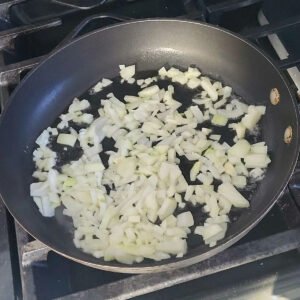
    • Sauté onion and garlic in butter.
      Sauteeing onions
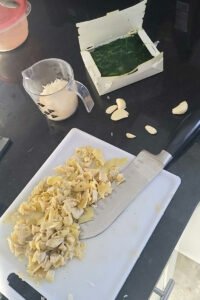
    • Chop the artichokes and the spinach. Add spinach and artichoke hearts; heat through.
      Chopping the artichokes and spinach
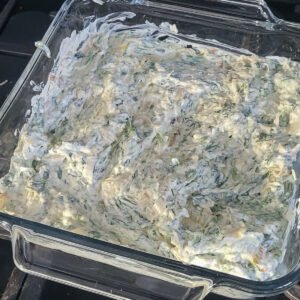
    • Mix in the cream mixture ingredients.
    • Put in an ovenproof pan or dish (CorningWare or similar).
      Mixed together with cream mixture
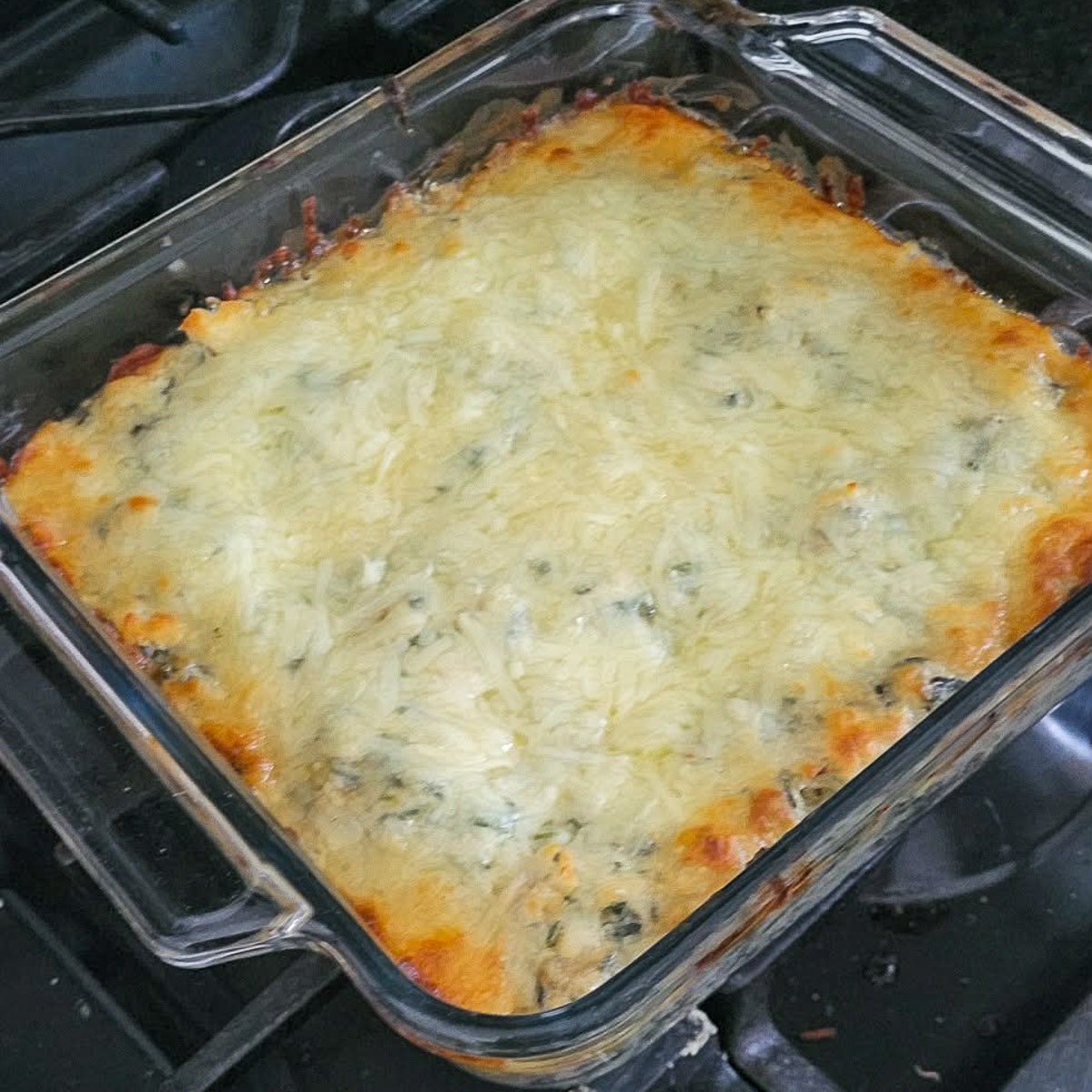
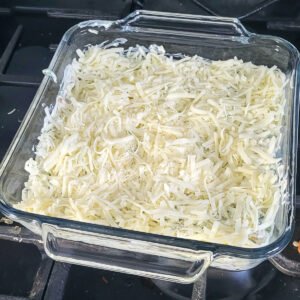
    • Sprinkle shredded cheese on top.
      shredded cheese
    • Bake at 350°F until cheese is melted, approximately 30 minutes.
    • Serve warm with crackers or tortilla chips. Enjoy!
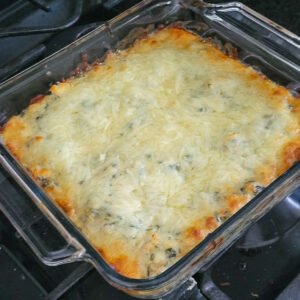
      Ready to serve spinach artichoke dip

    Notes

    “Always a big hit even with people who don’t like spinach. I add more onion & garlic – we like it a little stronger..” – Ali’s Mom Lori.

    If you are looking for another super simple appetizer look at these Snack Snails.

    How did you like Lori’s recipe? Let me know, and leave a comment below!

    And coming back to the game night, I can only recommend the Hunt a Killer game Death at the divebar.

  • Swabian Potato Salad: The Authentic Family Classic (No Mayo!)

    Swabian Potato Salad: The Authentic Family Classic (No Mayo!)

    As for my second recipe, I would like to share my family’s swabian potato salad recipe. We use it as a side for various meals, like Maultaschen (a Swabian take on Ravioli), Schnitzel, Leberkäse (a bologna-style meatloaf), or any BBQ meats.

    Our recipe does not use beef or vegetable broth as many others do; it purely relies on water, oil, vinegar, and timing for its consistency.

    The Basics of a Real Swabian Potato Salad

    1. The Potatoes: Finding the Right “Bite”

    In Germany, potatoes are labeled by how they turn out when cooked, which defines how they are used. The three categories are:

    • Mehlig kochend: Floury potatoes that lose all their bite (perfect for mashed potatoes).
    • Festkochend: Firm-boiling potatoes that keep their shape (essential for salad).
    • Vorwiegend festkochend: Somewhere in between.

    The challenge is finding the equivalent in the US. My research and testing found that Yukon Gold and Red Potatoes are the best choices. I’ve confirmed that Red Potatoes work quite well for this recipe.

    2. The Dressing: The Secret to Creaminess

    Unlike most American potato salads, the Swabian version has zero mayonnaise. It gets its creamy consistency purely through the combination of oil, vinegar, hot water, and the natural starch of the potatoes.

    The seasoning is simple but effective:

    • Salt and pepper
    • Finely chopped onion
    • High-quality vinegar and oil

    3. The Timing: Achieving the “Schmotzig” Factor

    Timing is everything. To get the right texture, you must peel and slice the potatoes while they are still hot. Since holding a boiling-hot potato is difficult, I recommend using the traditional small three-pronged potato forks (Pellkartoffelgabel).

    Pellkartoffelgabel from Fornax (wikimedia)

    Important: Immediately add the hot water and mix the ingredients while the potatoes are steaming. If you let the potatoes cool or use room temperature water, the starch won’t react correctly, and you’ll miss out on that signature Swabian creaminess we call “schmotzig.”

    With those basics you are now ready to make my families recipe for a Swabian Potato Salad.

    Swabian Potato Salad – Mayo-free family recipe

    Step-by-step recipe for a traditional Swabian potato salad.
    Prep Time15 minutes
    Cook Time25 minutes
    Total Time40 minutes
    Course: Salad, Side Dish
    Cuisine: German
    Keyword: german, potatoe salad, potatoes, salad, side dish, swabian
    Servings: 8 servings
    Calories: 295kcal
    Author: Hannes

    Ingredients

    • 3 lb Potatoes Yukon Gold or Red Potatoes
    • 9 tbsp Olive oil
    • 7 tbsp Vinegar
    • 1 Onion finely chopped
    • 250 ml Hot water
    • 1 tsp Salt
    • 1 tsp Pepper freshly ground

    Instructions

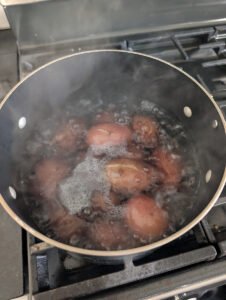
    • Wash the potatoes and put them in a pot. Add water until all potatoes are covered and bring it to a boil. Boil for 25 minutes (or until it passes the fork test).
    • While the potatoes are cooking finely chop 1 onion and add all other ingredients into a bowl.
    • Once the potatoes are cooked, drain the water. Cool them a little bit with water from the faucet, which you then also drain.
    • Start peeling the potatoes. Attention! Still hot! In the meantime bring 250 ml of water to a boil.
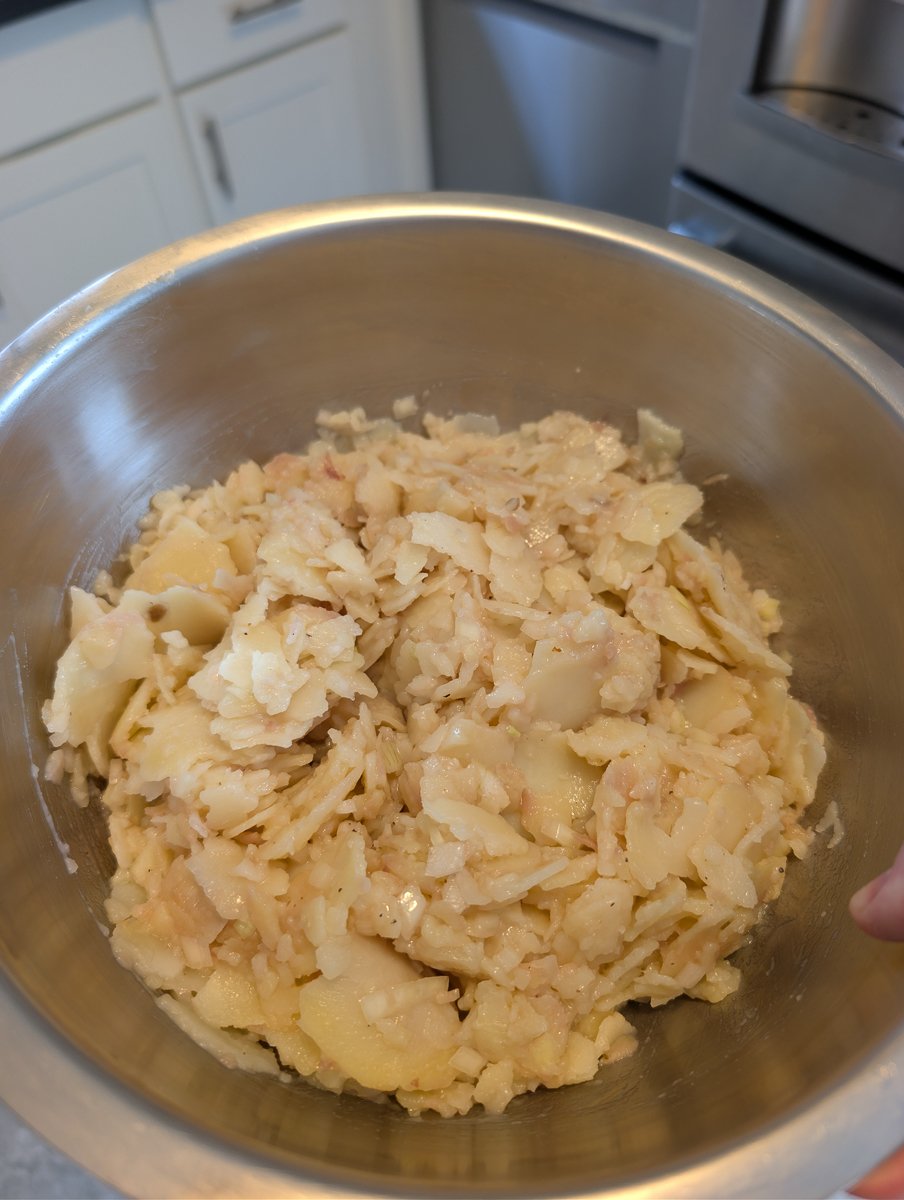
    • Slice the potatoes with your favorite way of slicing them. Once done, mix up the potatoes with the other ingredients in a bowl.
    • If you are happy with texture and taste, you are done here. Depending on the potatoes, you might want to add some more water/vinegar/oil. Adjust salt and pepper to taste.
    • Enjoy!

    Notes

    The fork test is when you take a fork and pinch it into a potato. When there is nearly no resistance, they are done.
    If you find the onions a bit too strong or bity, just sauté them briefly in a pan.
    The last time, I used this viral cheese grater to slice the potatoes, my fiancé found on TikTok:
    The viral cheese grater
    The viral cheese grater
    For the vinegar I use Altmeister German Vinegar, which I got at the Polish Market in Troy.
    Altmeister Essig
    Altmeister seasoned vinegar
     

    Did you try my recipe? Was everything clear? I am new to this and this is only my second recipe (of hopefully many many more to come) I created here.

    This potato salad goes great with Schnitzel or Maultaschen! Looking for a different Swabian side? Checkout Spaetzle!

    When you are new to my page, feel free to checkout my motivation.

  • German Bacon & Cheese Pinwheels (Easy 4-Ingredient Appetizer)

    German Bacon & Cheese Pinwheels (Easy 4-Ingredient Appetizer)

    This is a very common recipe used as finger-food/appetizer at many of our events in Germany. This past New Year’s Eve I tried it out on my American friends. Everybody was quite happy with it! For this reason I think this is a good very first recipe for my project for 2026.

    The recipe only requires 4 ingredients and is really super easy! In Germany my family calls them Aldischnecken, which means Aldi snails, because you get all 4 ingredients cheaply at Aldi. Here in the US I did not see a refrigerated (not frozen!) puff pastry dough at Aldi yet. I used the Jus Rol dough for mine, which you can get at the bigger grocery store chains.

    Easy savory pastry snack snails

    This is a super easy recipe for an easy appetizer made out refrigerated pastry dough, cheese, cream cheese, bacon.
    Prep Time15 minutes
    Cook Time15 minutes
    Resting Time in Freezer15 minutes
    Course: Appetizer, Finger Food
    Cuisine: German
    Keyword: appetizer, snack
    Servings: 25 pieces
    Calories: 110kcal
    Author: Hannes

    Equipment

    • Baking sheet

    Ingredients

    • 150 g Flavored cream cheese e.g. chive and onion
    • 1 pack Refrigerated puff pastry dough e.g. Jus Rol
    • 100 g Bacon leaner bacon preferred
    • 100 g Shredded cheese

    Instructions

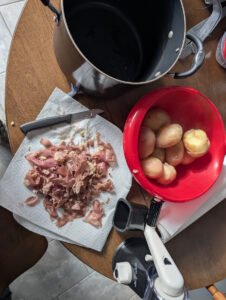
    • First cut your bacon in little pieces. Fry in a pan if the bacon is too fatty. The amount of bacon being used later should be around 100g after frying.
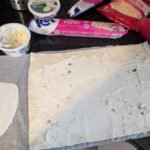
    • Roll out the pastry dough and distribute the cream cheese of your choice over the pastry dough. Leave a little room on one of the long sides.
    • Add the shredded cheese and the bacon pieces. Distribute evenly.
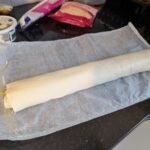
    • Roll the dough from the side where you didn't leave room. Try to do it as firm as possible. Put the dough in the freezer for 15 minutes. Preheat the oven at 375°F in the meantime.
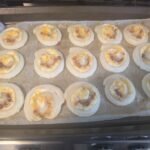
    • After the roll rested in the freezer for a bit (at least 15 minutes) take it out and cut it up into half inch slices. Distribute on your baking sheet and leave some room in between (you can use the baking paper from the pastry dough). Bake for 15 minutes.

    Notes

    You can use whatever cream cheese and shredded cheese you like. In my last attempt I used Jalapeno cream cheese and some spicy cheese blend. If you only have plain cream cheese available, just season it with some fresh herbs or spices and my favorite: Paprika powder! One snail has about 110 calories!

    I hope you enjoyed this German appetizer. I do have this fancy function where you can just rate my recipes, which is why it would be nice if you could just do that and leave a comment, if you tried it successfully!

    Make sure to try my Spinach Artichoke Dip or my Fleischkuechle (German meatballs)